Tuesday, July 18, 2006

Men of Letters


Most people associate Hill Harper with Hollywood, But he is just as comfortable in a school auditorium, rousing groups of students with his unique style of real-life wisdom. Having addressed thousands of high-school and middle- school students over the years. Inspired by the countless letters and e-mails he has received from teens, Interspersed throughout are e-mail inquiries from young men and Harper's responses and those of other celebrities, including Nas, Venus Williams, and Barack Obama. He devotes separate chapters to school and work, sex, and life aspirations, tackling such issues as single parenthood, sexually transmitted diseases, the allure of materialism, and the power of words and faith. Harper offers his personal story: Hill Harper set out to write a series of letters to young people that would catch the attention of even the most reluctant readers. The result is a motivational but approachable book full of encouragement on a wide array of hot topics, particularly among young African-American and Hispanic men. From the challenges of getting a good education and making it through college to the media’s destructive emphasis on material wealth, Letters to a Young Brother delivers eye-opening answers.

Check out his site


Review
This isn't the most enthralling or cogent book on the subject of black male identity and destiny, but brother Harper really won me over with his heartfelt personal truths and some pretty decent writing.

I would encourage all young brothers and "mothers" of young brothers to pick up a copy of this book right away. It'll be a cool summer read, too.


Letters to Young Black Men

by Daniel, III Whyte (Paperback - Aug 1, 2005)
Whyte is a minister and his book was actually written from numerous historically black colleges, such as Tuskegee, Morehouse and North Carolina A&T, from the very heart of a black Baptist minister, who has himself faced all of the perils and problems young black men face today, comes forth this book, written just for the young black man in you life, whether you are a Mother, Father, grandmother or Sunday School teacher. "Letters to Young Black Men" is overflowing with "advice and encouragement for a difficult journey."

His book can be found here

Review
"
This book is an inspirational work for the reader. It explores the three aspects of life that causes conflicts and problems in the life of young men. The spiritual, mental, and emotional aspects of life that for so long has gone unaddressed are delved into in detail. Although the book talks about young black men, this is a lesson for all young men."

Monday, July 17, 2006

Marva Collins Way


“I promise that each day shall be gained, not lost; used, not thrown away.” Students are taught to have ownership of their education, and are guided in realizing that responsibility is the key."

Marva Collins grew up in Atmore, Alabama at a time when segregation was the rule. Black children were not permitted to use the public library, and her schools had few books. Nonetheless, her father, a successful businessman, instilled in her an awareness of the family's historical excellence and helped develop her strong desire for learning, achievement and independence. After graduating from Clark College in Atlanta, Georgia, Marva Collins taught school in Alabama for two years. She moved to Chicago and, subsequently, taught in Chicago's public school system for fourteen years.

Mrs. Marva Collins' success with students labeled as "unteachable" by others led to profiles in Time and Newsweek magazines and television appearances on 60 Minutes and Good Morning America. Her life was the basis for a CBS Special Movie, The Marva Collins Story, with Cicely Tyson and Morgan Freeman. During his presidential term, Ronald Reagan offered her the post of Secretary of Education, but she declined in order to stay with her school.

Collins' educational program and methodology is based on the Socratic Method. Socrates, an Athenian philosopher and teacher, lived from about 470 – 399 BC. The Socratic method teaches by using a series of questions and answers by which the logical soundness of a definition, or a point of view, or the meaning of a concept, is tested. The Socratic method is based on logical analysis, consequently, it develops superb reasoning skills in students.

Mrs. Marva Collins promotes excellence for the children in her charge. Effective teaching requires making daily deposits so that every child can become a lifetime achiever and they will never have to go through life faced with "insufficient funds". She tells her students that if you cannot keep one desk orderly, how can you possibly keep the world. She believes if we are not in control of small things then the larger order of things will not become ours to command. Marva Collins believes every child is a winner until somewhere, someone teaches him or her too thoroughly that they are useless.

Friday, July 14, 2006

Inner-City Teacher Takes No Shortcuts to Success

There are so many great teachers who are making a difference, Rafe Esquith is a one, a hero.

Here's article on the celebrated teacher click here to hear the NPR interview

"There is a misconception that poor children do not care about school," Esquith says. "It's just not true. If you build it, they will come.

"We have a culture here with so many wonderful things for the children to do that they hate leaving this classroom."

He's won the American Teacher Award, been awarded the National Medal of Arts, and made an honorary Member of the Order of the British Empire.

And yet for 24 years, Rafe Esquith has continued to teach at Hobart Elementary, an inner-city school in Los Angeles, inspiring his fifth graders to excel far beyond the low expectations often placed on poor, immigrant children.

Every morning, Esquith's students arrive at school at 6:30 a.m., nearly two hours before the rest of the students, to work on mental math exercises. It's part of what he calls the "culture of excellence" in his classroom. Esquith expects a lot from his 10-year-olds, and he gets it. They volunteer to come in early, work through recess and stay late until 5 p.m. And they come to class during vacations and holidays.

Their hard work shows up in test scores: They consistently score in the top 5 percent to 10 percent of the country.

The second-largest elementary school in the nation, Hobart has more than 2,000 students; 90 percent live below the poverty level. All are from immigrant families, primarily Hispanic and Asian. Though none speaks English as a first language, Esquith's students read literature far above their fifth-grade level -- Catcher in the Rye, Huckleberry Finn, To Kill a Mockingbird.

But Esquith takes his students beyond contemporary literature and into a world at the heart and soul of his teaching: an intensive immersion in William Shakespeare -- reading his plays, studying his life and times. This yearlong study culminates in April, when students present a full-length, unabridged production of Shakespeare. Last year, it was Hamlet. This year, it's The Taming of the Shrew.

That intensive education has taken the "Hobart Shakespearians" far beyond their classroom; they've appeared at the Old Globe Theatre in London, before the Royal Shakespeare Company, and at Shakespearian festivals throughout the United States. They've also garnered attention from the likes of actor Ian McKellan and Oprah Winfrey, who recently donated $100,000 to the class' activities.

As Esquith explains it, his students aren't geniuses; they just outwork everybody else.

To check out his book There Are No Shortcut click here

Thursday, July 13, 2006

Guys Like Me


Jon Scieszka grew up with five brothers. Taught elementary school for ten years. Has been writing books for kids for fifteen years.
The most popular being

As a result, he thinks he has an idea why boys might not like reading.

Jon like so many understands that boys often
have to read books they don’t really like. They don’t get to choose what they want to read. And what they do like to read, people sometimes tell them is not really reading. (comics, graphic novels, baseball & rap magazines.)

GUYS READ website was made to help with all of those things.
at guysread you will find links to authors of Guys of all ages read
with an inpressive list of of authors that inspire guys to want to pick up a book

Most impressive is the message to get guys to read

Men: get off your. . . busy schedule. . . and read with your boys. Be a role model. Talk about reading. Let boys see you reading. Acting as a positive, literate role model is the single most important thing you can do to help boys read.

• Booksellers: have male staff members highlight their favorite books for boys. Make a display of GUYS READ books.

• Teachers and librarians: Take another look at your required reading lists. Imagine how many of the books would appeal to you if you were a boy.

• Let boys know that non-fiction reading is reading. Magazines, newspapers, websites, biographies, science books, comic books, graphic novels. . .are all reading material.

• Form a father-son or parent-son Bookclub. Meet at an indoor soccer facility or gym to talk about books, and then run around too. Be a model for how to read a book and talk about it.

• Look at the recent literature on the psychology of boys (some titles listed below).

A FEW OF JON’S FAVORITE BOOKS FOR GUYS
For Young Guys
The Carrot Seed, by Ruth Krauss. Illustrated by Crockett Johnson.Go, Dog. Go!, by Philip D. Eastman.The Stupids Die, by Harry Allard. Illustrated by James Marshall.Grimm’s Fairy Tales
For Early Readers
Be A Perfect Person in Just Three Days, by Stephen Manes. Illustrated by Tom Huffman.Flat Stanley, by Jeff BrownThe Hoboken Chicken Emergency, by Daniel Pinkwater. Illustrated by Jill PinkwaterScary Stories to Tell in the Dark, Alvin Schwartz, editor. Illustrated by Stephen Gammell.Sideways Stories from Wayside School, by Louis Sachar. Illustrated by Julie Brinckloe.The Twits, by Roald Dahl. Illustrated by Quentin Blake.
For Older Guys
Oddballs, by William Sleator.Tangerine, by Edward Bloor.Watchmen, a graphic novel by Alan Moore.
Poetry
Kids are the best judge of the poetry they like. I like the funny poetry of Douglas Florian, Colin McNaughton, Jack Prelutsky, and Shel Silverstein.
Nonfiction
Choose books based on the subjects they care about. Look at books by Russell Freedman, David Macaulay, Jim Murphy, and Seymour Simon.


A FEW GOOD BOOKS ABOUT GUYS
Gurian, Michael. The Good Son: Shaping the Moral Development of Our Boys and Young MenGurian, Michael. The Wonder of Boys: What Parents, Mentors, and Educators Can Do to Shape Boys into Exceptional MenKindlon, Daniel J.; Thompson, Michael; et al. Raising Cain: Protecting the Emotional Life of BoysPollack, William S. Real Boys: Rescuing Our Sons from the Myths of BoyhoodPollack, William S. Real Boys' Voices
I could go crazy trying to squeeze in more of my favorite books. Check these out for starters.

• Check in to www.guysread.com to hear more from experts, find out what other guys are doing, get recommendations and booklists, share your successes and failures.

Wednesday, July 12, 2006

Tips for parents:


Tips for parents:
Getting boys to read


"If you are going to get boys to read, you must recognize the things that make boys different," says librarian and educator Michael Sullivan. Sullivan, author of the book "Connecting Boys with Books: What Librarians Can Do" recently presented a workshop through the Washington-Saratoga-Warren-Hamilton-Essex (WSWHE) BOCES on how to encourage boys to read.

The seminar was attended by several Guilderland Central School District librarians, who shared some of Sullivan's findings:

Did you know?

  • On average, boys read 1.5 years behind girls

  • A recent study out of Great Britain showed that girls read 15.6 hours per week versus boys, who typically read only about 2.3 hours per week

  • 60% of A's in the classroom go to girls; 70% of D's and F's go to boys

  • 80% of high school dropouts are male

Sullivan offered all educators, including parents, a challenge: reach out to boys on their turf; that is, find out what makes them tick and connect them with books that appeal to their interests.

Practical strategies

Sullivan also offered some additional strategies:

  • Finding and promoting male readers as role models

  • Use active learning - adding physical stimulation to reading time (boys' brains learn better with music, movement, etc.)

  • Using the power of challenging (and competitive) activities

  • Reaching out with stories that resonate with boys at each particular age

  • Talking about books in ways that make boys listen

  • Read to boys; tell stories

What will they Read?


Walter Mosley's

Always Outnumbered Always
Outgunned
is a book of 14 short stories featuring Socrates Fortlow as he deals with the hardships facing an ex-convict who is trying to fit back into society. Mosley cover a vast range of societal issues that can be considered mundane at first glance, but which make up the important detail of life. Socrates' approach to his problems range from borderline illegal to genius in their simplicity and common sense.

Socrates' displays his philosophical age of wisdom in the opening story when he catches Darryl, a local boy who has stolen and killed a rooster. He proceeds to teach Darryl the difference between right and wrong in a caring but unorthodox way. Immediately following this is a story where Socrates engages in an act of vigilantism, using his violent nature to warn off an undesirable character living in the neighbourhood. These opening two stories paint a vivid picture of the two opposite sides of Socrates Fortlow, the reasoning thinker and the man of violent action.

Philosophical debates dominate many of these stories as Socrates meets men who: are thieves; are cheating on their wives; have walked out on their wives; have fought and killed in wars and who are now trying to cope with it; are cruel to animals. In each of these stories Socrates imparts his own brand of wisdom on others while inside he is in a struggle to contain the rage he feels towards these people.

This is a great discussion book on choices and consequences.

Recommended for teens 15 an up

Reveiw provided by Untouchable

Monday, July 10, 2006

Creativity is the Answer

Sir Ken Robinson believes our educational system plays a role in diminishing creativity by promoting learning based solely on a critical and rational approach.

“There is a sense of futility built into our approach to the arts, which is why they are marginalized,” he said.

“We say to children, ‘Don’t do art. You’re not going to be an artist.’ Interestingly, we don’t say, ‘Don’t do math. You’re not going to be a mathematician.’


Could the educational system's sole approach be the reason why so many urban males drop out of school

He talks about the subject of creativity at Ted 2006


If the video won't play click here

The Big Deal (Conclusion) The Last Word


"After spending more than eight years as a classroom teacher and five years teaching grade 8 African American adolescents living in an economically depressed area, I have concluded that increasing students' reading and writing abilities calls for much broader dictates than test-- driven educational practices that are intended to meet minimum standards".

Alfred W. Tatum author of
Teaching Reading to Black Adolescent Males: Closing the Achievement Gap


"Such naysayings from so many who either don't like either character or don't follow them.Then this doesn't affect you. Reggie Hudlin has been branded the official 'hollywood' guy to take all fanboy aggressions out on and I doubt,as sales indicate, that most are even reading BP at all. It is not bad at all. The House of M issue was the best thing connected with the whole event.
People bitched and moaned when Priest's BP was cancelled (because, again, sales were poor--too bad, it was one of Marvel's best titles)and they bitch and moan about Hudlin's.
Bah! Too much negativity 'round here.
Allaboutme

Reginald Hudlin started a new Black Panther series last year; one story line sent the title character and Luke Cage to post-Hurricane Katrina New Orleans to help in the cleanup. (Fittingly, Hudlin, who is also a film director, described the teaming of an ex-cop and African king as a "a buddy action movie.")

"The reality is that there's been so few black characters who have their own book, who have been consistently published," Hudlin said, "let alone a black character who has been written by a black writer and the perspective that comes from that."

He added: "I'm not saying you have to be black to understand the character, but very often the best writer may be the writer who best understands the culture of the character."

Fans have debated whether the new Black Panther title succeeds - "We all like the character, why can't we disagree on the writing?" blkyoda wrote on hudlinentertainment.com - but Hudlin proudly spoke of a man who reads the series to his son, two pages a day.

In the end that equals success.

Saturday, July 08, 2006

The Big Deal Part #5 The Hero's

Literacy instruction should include a combination of teaching techniques to empower African American students and it should be a vehicle to examine how cultural definitions of race and class are constituted historically and socially. Schools are part of a wider dominant culture that marginalizes the experiences of many African American students, preventing these students from drawing upon these experiences to gain control of their lives.

Alfred W. Tatum author of
Teaching Reading to Black Adolescent Males: Closing the Achievement Gap

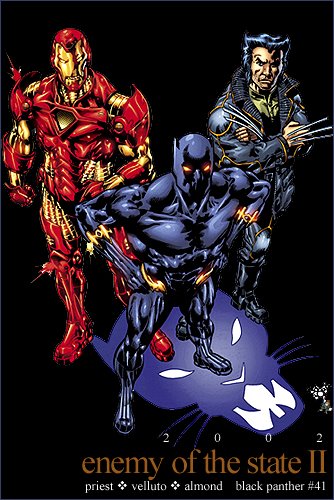
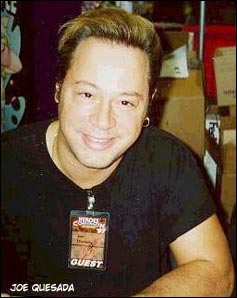
There was a rumor going around that, shortly before the launch of the orignal BLACK PANTHER, Chris Claremont— Marvel's Director of Quality Control at the time— scoffed that the book wouldn't last six issues. The rumor had it that Marvel Knights honcho and PANTHER Editor Joe Quesada, angered and annoyed that a Marvel officer was prejudicing people against his book, stormed into Claremont's office, put a thousand dollars in cash on Claremont's desk, and demanded Claremont either shut up or put his money where his mouth was. I am told Claremont did not take Joe's bet. As it turns out, that was a good thing (and, rumors being rumors, I'm sure this big fish story has been embellished over time). At this writing, I am spending the weekend re-writing scenes in BLACK PANTHER #53, the fifty-third issue of a book nobody (myself included) thought would go past issue #12, but a book that has been dogged, from issue #1, with rumors and predictions of cancellation.

Marvel Comic Editor in Chief Joe Quesada can see ther future of comics and knows its not monochromatic. Understanding that to in order to attract readers from European, Latin and Asian markets comics must expand their thinking. Quesada gave Black Panther his own comic when he cam onboard in 1998 and has supported diversifying character since.

Quesada recalls the 2004 debut of Arana, a Hispanic girl with Spider-Man-like powers. She made a big splash and quickly received her own series in 2005, but it lasted only a year. It is with his blessing that Marvel is taking a chance to make the Black Panther/Storm wedding is a reality.

Another hero is Judd Winick, the comics writer who is perhaps still best known as a cast member of MTV's 1994 "Real World," also emphasizes diversity in his work. He introduced a Japanese lesbian superhero during his tenure (2001 to 2003 ) on "Exiles," a Marvel comic about mutants saving alternate realities from destruction. "Outsiders," which he currently writes for DC, has a multiethnic cast that includes Grace, a rowdy Chinese-American powerhouse, and Thunder, the daughter of Black Lightning. Winick even had Green Arrow, as the mayor of Star City, legalize gay marriage.

"It's nice when a young reader can gravitate toward a character and feel represented," he said. Winick, who is white, said that wasn't always the case, citing the experience of his wife (and "Real World" cast mate) Pam Ling, a Chinese-American who, with her sisters, used to watch "Wonder Woman" because of her dark hair. "That's as close as she was going to get" to a sense of kinship, he said.

"When I get gripes for my need to force my social agenda into comics, I always ask: which social agenda are you complaining about? Is it the gay people? Or the black people or the Asian people?

"After a while, it doesn't look like a social agenda. This is the world we live in."
Straight (and not) out of the comics


Friday, July 07, 2006

The Big Deal (Part 4) Industry Facts & Ugly Truths


“The Panel” a weekly feature on the Comic website Silver Bullet Comics Where industry professionals are asked their opinions dedicated 2 features on race I wonder how much their response reflected the Publishing industry as a whole?

Why Don't "Black Comic Books" Sell?

To read the whole discussion click here

Here are highlights


Fredrik Strömberg: As I have stated several times in my book "Black Images in the Comics", I think that sadly, most Black characters in mainstream comics are created, and treated, as representatives of all Black people. This symbolic nature, of course, makes them rather limited as characters.

The comic fans in the USA seems to be mostly white boys, a fact that works as a catch-22 to make sure that other groups like for instance female readers and creators for the most part are locked out of the action.”

Craig Lemon: "Why aren't there more black-superhero books? Because they don't sell. Why don't they sell? The same reason that female-led superhero books don't sell very well. Because the primary audience for superhero is white males. And the main way you can get female-led superhero books to sell is to plaster them with cheesecake art - step forward Greg Horn and Michael Turner. I also believe that most white males are closet racists - even if just subconsciously...oh, you could argue that someone reading a superhero book puts themselves in the place of the hero, and white males cannot identify with black heroes for some reason...I would venture that that reason is racism. Why are there few Arabic superheroes in US comics? Why are there few Hispanic blah blah blah? The answer is the same.

"Why are Black couples so rare in comics (superhero, romance, etc.) when Black romance novels, movies, and TV shows enjoy a broad appeal in the mainstream that the industry would kill for?

To read the whole discussion click here

Here are highlights

James E. Lyle (a.k.a. Doodle): I think that there is no more inherently racist industry than the various media. That about sums it up. The problem is the media want to APPEAR to be "racially equal", but they simply can't present honest interpretations of various individuals within ethnic groups and still make their slants work.

The problem is analogous to what's going on in the American news right now. "The Hispanic Vote" is being touted in all the major news media. But there is no "Hispanic Vote"; as if all Hispanic people thought or acted the same way! How insulting is that?

Bart Thompson:First compare the amount of Black characters within other mediums such as novels, movies, and television. There’s not many Black couples in comics because there aren’t that many Black characters to begin with! In the other mediums whole properties can have an all Black characters and they will reach their targeted audience (the Black community and even non-Black supporters). BET is the “official” Black Entertainment Television station, but for a while UPN seemed like a haven for all the newer Black shows (now there’s even TV One for older Black shows like the Jeffersons, Good Times, 227, Cosby Show, Sanford & Son, etc.). With movies, that Tyler Perry is raking in the cash (I personally don’t get it, but more power to him- he has his audience and he’s catering to them). We have things like the two Barbershop films, the Brothers, Love & Basketball, Soul Food (that even spun off into a series), and Beauty Shop. When it comes to comics, Black characters are a bit harder to find. For more discussion and possible solutions, check out the Herotalk boards: http://www.blacksuperhero.com/bsh/index.php

Alan Donald:This question has made me examine several things in my life. I hadn’t considered just how white comicbooks are. I didn’t have a clue which creators were black, white or whatever. Not being racist is not enough. Complacency is a terrible sin. The current situation in the comicbook industry is wrong and definitely racist. We should think about this, we should examine it and we should act. It doesn’t stop there, the industry is homophobic, very sexist and it is generally prejudicial. Think about it. Act.”

Summary: This is a very difficult one to summarise. Racism and economics seem to be the most basic factors when one boils it all down. One thing is clear and that is that the current situation is intolerable.


Thursday, July 06, 2006

The Big Deal Part #3 The Haters


"Helping African American adolescents from impoverished communities become better, more involved readers may call for different dictates because of the historical mistreatment this group has experienced in the United States. These students are more likely to attend low-achieving schools that have limited resources and have a greater chance of being taught by teachers who hold low expectations for their students' success".
Alfred W. Tatum author of
Teaching Reading to Black Adolescent Males: Closing the Achievement Gap

Critics made up of politicians, educators, parents, the guy down the street and worst of all writers and publishing houses will decry that books targeted toward black and brown and many Asians minorities are a waste of time.
To quote Walter Mosley, "the general perception on Black fiction used to be that whites don't want to read about blacks, black women hate black men, and black men don't read".

None of the above is true but many still hold on to the notion

Its most sinister manifestation is by negatively criticizing the object of interest so severely that interested party either disposes of it, or takes it underground (hip hop)
The word the hip hop generation uses to define this group is HATERS, RACIST is the moniker the rest of us use

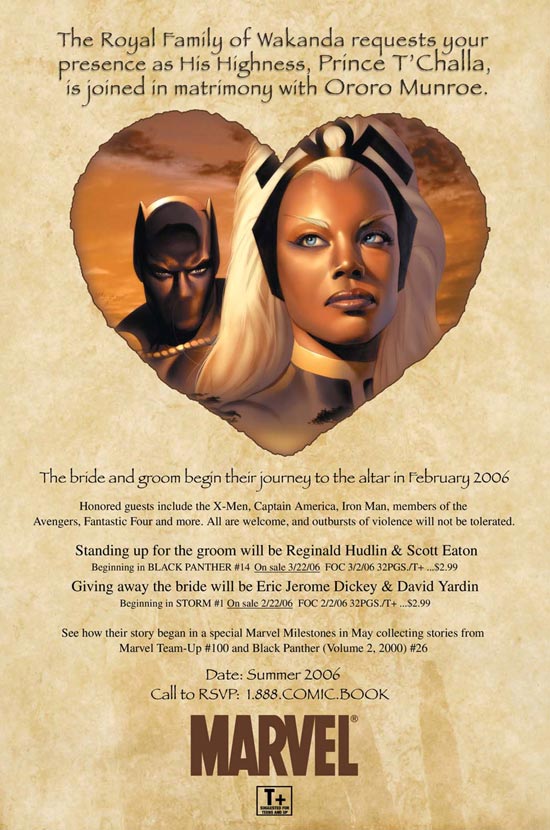
Of course individually these haters/racist will quickly deny it and accuse the accuser of playing the race card, but witness the comments regarding the marriage of two fictitious characters

"The whole thing seems to be premised on the idea that a marriage between Storm and the Black Panther is inherently plausible simply because... well, they're both African, aren't they? And they must have so much in common, what with Africa being a continent of 840 million people spread across almost twelve million square miles. It's an attitude that suggests a very American way of looking at Africa - not a real place, so much as a source of ethnic identity for Americans. To an extent that sort of attitude isn't a commercial problem, because it's shared by many of the readers they're targeting. But when the characters are slung together as suddenly as this, it can't help but feel like an arbitrary exercise in pairing up the black people.

Marvel may well be targeting the right audience. But they're doing it with a very blunt instrument wielded by a debatably marketable writer". Paul Obrien

"To me, this whole thing just stinks...they are trying to make it out as though this has been building up for years? What the heck? How many issues have been devoted to these two...like 5 in in past 20 years? It seems forced. Storm sees Panther while fighting russian apes and decides she really does love him after all thse years and wants to marry him? Are we gonna have to hear Panther, on their wedding night, tell storm again "you got me straight tripping, boo." Man, she dates Forge for 10 years and they don't get married, but she sees BP again, and boom, its wedding bells. I wish they would just call this what it is, a forced event trying to attract minority readers. I'm all for attracting every reader you can get, but don't insult our intelligence" article here


"Don't worry. If Halle Berry is playing the part of Storm in the movie adaptation, this marriage will be over in days. No disrespect intended toward Halle Berry... those dudes she marries are just nuts". article here


"How am I being racist? I am sure people of all colors, backgrounds and religions read Black Panther, as well every other comic out.

But this is being billed first as the marriage of the two most promonant african american characters (of course later changed to black cause, duh, BP isn't american), and is manily being advertised outside of the comic world in mainly black marketplaces, like BET.

Like I said, I have no prob with them trying to gain new characters. But I kinda think its racist that they have to put to important black characters together just cause they are black. Most of their history together has been minor, imo, and the recent stuff has been stuck in to make this marriage go through. Storm has had relationships with many people of all different colors. A marriage to forge would make much more sense to me because they actually have a rich history, rather than just seeing to top selling minority characters and sticking them together".
article here

Even the writer Reginald Hudlin is not immune to Haters, in a interview at Harpo's Juke Joint the writer states

"I'll be honest - the fact that ANY of this shocks or upsets people blows my mind. I didn't anticipate any of this. But I think we've pretty firmly established there is a real gigantic "perception of reality" gap going on here. One person's dream come true is another person's nightmare, I guess. That is part and parcel of the whole "ownership" issue when it comes to some rabid comic book readers. "We thought you were 'different', we thought you were 'ours'". Classic madonna/whore syndrome. They want her with someone they identify with - Wolverine, or Forge - or just alone, always potentially available for capture and symbolic rape by villians."

4 Final Points

1. Marvel hired Reginald Hudlin and Eric Jerome Dickey to write the Black Panther/Storm because they want to attract the untapped African Amercian market and beyond

2. The harshest critics of stories targeted toward minorites that are written by minorities are generally white males, who other than the statement that Hudlin made cannot possibly have the emotional connection than the books intended audience. In addition, why is it this same crowd had no comments regarding Storm dating a Native American, a younger blonde white male, Wolverine or even a blue furry mutant, but now that she dates a brotha the idea is preposterous? (haterism/racisim)

3. The very climate this one comic storyline has created prevents ideas for books targeted toward the black brown and yellow market from ever getting off the ground marketed under the guise, "they won't read the book".

4. There has to be an acknowledgement that in addition to many youth (males particulally) not wanting to read, there is a climate out there that does not want them to read books that inspire or empower (in short, stick with Native Son, son).

The Big Deal Part #2 The Idea


"A gentleman at a local bookstore explained nesting grounds as the nourishment you find when you are surrounded by nutrients that feed the mind. Educators must give poor African American students who struggle with reading the nourishment that feeds the mind and provide them with the sustenance to enter a different world from the one in which they were born".
Alfred W. Tatum author of
Teaching Reading to Black Adolescent Males: Closing the Achievement Gap

This year will be a banner one for diversity in the $500 million comic book business. At DC Comics, an effort is under way to introduce heroes who are not cut from the usual straight white male supercloth. A mix of new concepts, dusted-off code names and existing characters, the new heroes include Blue Beetle, a Mexican teenager powered by a mystical scarab; Batwoman, a lesbian socialite by night and a crime fighter by later in the night; and the Great Ten, a government-sponsored Chinese team.

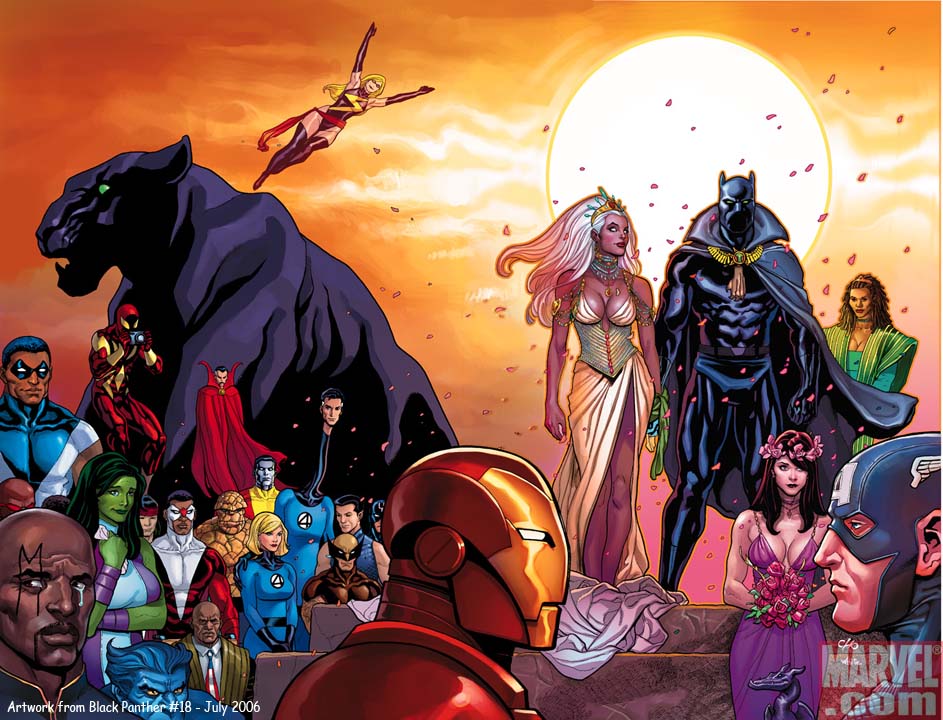
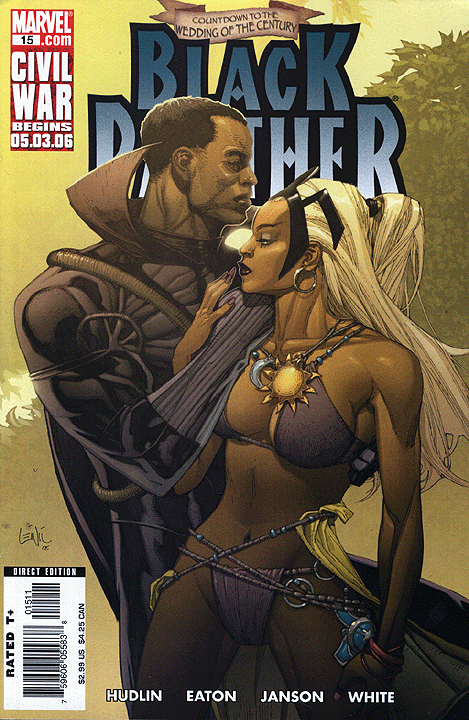
Over at Marvel Comics, Black Panther, king of the fictional African nation of Wakanda, will soon marry Storm, the weather-controlling mutant and member of the X-Men. Luke Cage, a strong-as-steel black street fighter who married his white girlfriend in April, plays a key role in "New Avengers," the company's best-selling book.


Comic books have featured minorities before, but the latest push is intended to be a sustained one, taking place in an alternate world that nevertheless reflects American society in general and comics readers in particular, in much the same way that the multicultural casts of television shows like ABC's "Lost" and "Grey's Anatomy" mirror their audiences. "I'm glad we're at the point when they're being rolled out without flourish - not 'Minority Heroes Attack!,' " said Judd Winick, who has written many comics for both Marvel and DC. "It's important just to see them as characters and not a story line about race."

Credit is due in part to diversity behind the scenes. Reginald Hudlin, Black Entertainment Television's president for entertainment, is writing the Black Panther series.

Joe Quesada is editor in chief at Marvel, the first Hispanic to have that job. "I do look at the universe with a different set of eyes," Quesada said, "but I don't let race enter or interfere with the story. There's nothing worse than thinking, 'We need three more black characters in the Marvel universe.' "

In the DC universe, many of the heroes are closely tied to "52," an ambitious, year-long series, published weekly, that began this month. With the established heroes Batman, Superman and Wonder Woman mainly offstage trying to find themselves after a strained alliance in "Infinite Crisis," the events of "52" force the new heroes into bigger roles.

"We're trying a lot at the same time," said Dan DiDio, DC's vice president and executive editor, "but we don't know how it's going to be accepted."

In 1993 DC printed and distributed the work of Milestone Media, an African-American-owned company specializing in comics with black, Asian, Hispanic and gay heroes. Some of the titles ran for nearly four years, but all ceased publication during a volatile time in the comic industry. One character, a black teenager with electrical powers, found greater success in the animated series "Static Shock."


Wednesday, July 05, 2006


The Big Deal part#1
The Announcement


"Jeffrey Wilhelm (1995) reminds us that most of reading for struggling, reluctant adolescent readers focuses on cracking codes instead of creating meaning. He goes on to state that the role of the reader as an active meaning maker-one who connects personally with what is read, who spends pleasurable and stirring time with stories, and who might judge or resist the text and its author-is essentially precluded from the act of reading. The way literature is mediated has a profound effect on adolescents' engagement with literature"
Alfred W. Tatum author of
Teaching Reading to Black Adolescent Males: Closing the Achievement Gap

On 01-26-2006, 03:02 PM Marvel Comics held a press conference to promote the upcoming summer Wedding of characters Black Panther and Storm. Participants in the conference included writers Reginald Hudlin and Eric Jerome Dickey, along with the usual Marvel staffers.
To say the least this announcement is a big thing in the African Amercian community
Superman has Wonderwoman
Batman has Catrwoman
DareDevil even had the Black Widow
Now African Americans could say their two favorite super heros have hooked up too
This event would also be written by African American's

Tuesday, July 04, 2006

Alternate Views

1 Weekend,
2
Blocks: Piedmont, Lakeshore.
2
Locations: Copy Shop, Book Store
1 C
ool result: Alternative Reading


AfroGeeks

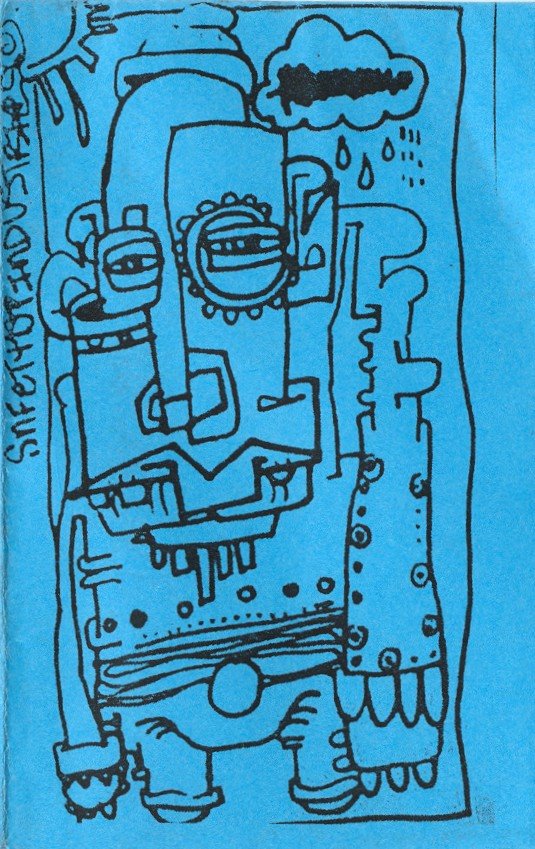
I was handed this sticker with an eye catching image and was told that the sticker was issued to encourage teens to read Afro Geeks books
So I checked it out and found a blog that was heavy on opinion the image of blacks in (sci-fi and pop culture) discussing topics from

  • Mixed race archetypes in Black sci-fi
  • Joss Whedon Doesn't Care About Black Men( Joss Whedon brought us Buffy the Vampire Slayer series, FireFly and is the current writer of X-men)
  • Black Emo

Some of their opinions I support others I would argue, but I like the way his opion's are presented, (IN YO FACE!)

AfroGeeks clearly know who they are taken from the Thursday, May 11, 2006

We are not monolithic or uni-faceted.
- We see the importance of both Public Enemy and The Clash.
- We got cable, not for BET or MTV, but for the SCI-FI channel.
- We want to hear Tamar kali alongside E40. (flamingyoni.com)
- We see the parallel between the hyphy movement and punk rock.
- We used Star Trek: DS9 to help our students understand the Iraqi invasion.
- We see the importance of a Pan-Black presence in popular culture.
- We miss Gordon Parks and Octavia E. Butler.
- We have stepped off of our blocks and dreamt of the stars.
- We have passports and have used them more than once.
- We know we are the shit…but, then again, so are you.
- We are Black, Post-Black, and see the advantages and limitations of this existence.
- We are not limited to hip-hop, even though we may love it dearly.
- We do not all know each other, but we do know that we are enormous in number.
- We are not mainstream, even when we are.
- We purchased our computers before we got our cell-phones.
- We rarely ever have to call tech support.
- We hear Digable Planet’s Rebirth of Slick and we still get chills.
- We can name more than 10 famous black folks, who are not celebrities, athletes or musicians.
- We are all around you.
- We are AfroGeeks.
- We are Alterna-Blacks.


Examples:

  • Octavia E, Butler: AfroGeek
  • Mos Def: Alterna-Black
  • The Roots: Alterna-Black
  • ?uestlove: AfroGeek
  • Tamar kali: Alterna-Black
  • Living Colour: Alterna-Black.
  • Fishbone: Alterna-Black
  • Vernon Reid: AfroGeek
  • Prince Paul: AfroGeek
  • Pam the Funkstress: Alterna-Black
  • Walter Kitundu: Alterna-Black
  • Kelis: Alterna-Black
  • Erykah Badu: Afro-Geek
  • Talib Kweli: Alterna-Black
  • Dave Chappelle: Alterna-Black
  • Nalo Hopkinson: AfroGeek
  • Steven Barnes: Alterna-Black
  • Dead Prez: Real Black!
  • Flavor Flav: Damn…I don’t even know

Unfortunately, I didn’t see any of their actual work but they are definitely worth checking out.

Black Futurist Movement


I got into a energetic conversation with one of the founders of Black Futurist Movement and learned that the BFM
is a collective of young black folks: rudies, activists, punks, artist, nerds and grimy backpackers that are dedicated to artistic expression.

BFM operates –with spiritual guidance from:

Lee Perry, Hank Shock Lee, Thelonius Monk, Etta James, Cecil Taylor, Robin Harris, Grace Jones, Dick Gregory, Prince, George Clinton, LKJ, Antoino Fargas, Alice Coltrane, Shuggie Otis, Sly Stone, Ornette Coleman, Don Letts, Jimi Hendrix, Sun Ra, Amiri Baraka, Nina Simone, Bill T. Jones, Earth Kitt, Blowfly, Uncle Cletus, Bad Brains, Basquiat, Melvin Van Peebles, Ismael Reed, Samuel Delany, Jack Johnson, Josephine Baker, Red Fox, Rick James, Greg Tate, Pootie Tang, Bob Newkirk, and nasty freaks just like your momma.

Their publication company Below Radar Publications produces two zines (short for magazine, but you knew that)

Pacificohigh: a fringe black culture zine

Color of Shadow: a 5 year old zine

If you tend to raise your freak flag high you should know that they are looking for artists, musicians, djs, hackers, phreakers, culture jammers, videographers, audio techs, travelers and vendors to put on art shows, parties and assault the world through small press and micro-cinema.

Contact them: at bfminc@gmail.com

I don’t know if the two know of each other but I found this distinction to be interesting


BFM


Afro Geeks


Monday, July 03, 2006

Positive Psychology for Ninth Graders


For most of its history, psychology had concerned itself with all that ails the human mind: anxiety, depression, neurosis, obsessions, paranoia, delusions. The goal of practitioners was to bring patients from a negative, ailing state to a neutral normal, or, as University of Pennsylvania psychologist Martin Seligman puts it, "from a minus five to a zero." It was Seligman who had summoned the others to Akumal that New Year's Day in 1998 ? his first day as president of the American Psychological Association (A.P.A.) ? to share a vision of a new goal for psychology. "I realized that my profession was half-baked. It wasn't enough for us to nullify disabling conditions and get to zero. We needed to ask, What are the enabling conditions that make human beings flourish? How do we get from zero to plus five?"

Claudia Wallis Time Magazine January 17, 2005

Dr. Seligman's Bio

In 1996 Dr. Seligman was elected President of the American Psychological Association, by the largest vote in modern history. His primary aim as APA President was to join practice and science together so both might flourish a goal that has dominated his own life as a psychologist. His major initiatives concerned the prevention of ethnopolitical warfare and the study of Positive Psychology.

An Inovative Approach to Teaching

Since 2000, Dr. Martin Seligman main mission has been the promotion of the field of Positive Psychology. This discipline includes the study of positive emotion, positive character traits, and positive institutions. As the science behind these becomes more firmly grounded, Dr. Seligman is now turning his attention to training Positive Psychologists, individuals whose practice will make the world a happier place, in a way that parallels clinical psychologists having made the world a less unhappy place.The U.S. Department of Education has awarded us 2.8 million dollars to teach positive psychology in the ninth grade for the next four years and learn what works. Susan Snyder described the purpose of the grant nicely in the Philadelphia Inquirer on December 10, 2002: "[The grant is] to research whether infusing the study of positive character traits in the curriculum will help students academically and emotionally." She went on to add, "If it works, the program could become a national model to be promoted through an Education Department clearinghouse." Here's how it happened.

An opportunity for research

In late May of this year, the Department of Education sent out a call for proposals as part of their Character Education initiative. They particularly want exemplary science and at last seem to be following the route that NIMH forged about thirty years ago when it lifted research in mental, illness from near-voodoo to respectable and cumulative science. My research group saw the call, we went into high gear.

Finding students

First, we contacted Sharon Parker, the visionary superintendent of the Wallingford-Swarthmore school system outside of Philadelphia. Having read Authentic Happiness and The Optimistic Child, she eagerly agreed to work with us. So we fleshed out a design in which half the students in the ninth grade (from among the students and parents who volunteered, of course) would be randomly assigned to Language Arts plus positive psychology and the other half to Language Arts as usual. Each of the four Language Arts teachers would teach one section of Language Arts with positive psychology and one without.

Planning the curriculum

Second, we spent the whole month of June, under the leadership of Dr. Jane Gillham and Angela Duckworth, looking over the dozens of positive psychology interventions that I have been teaching to Penn undergraduates and adapting fifteen of them for ninth graders--gratitude night, fun versus philanthropy, recrafting tedious work into flow, and others. We integrated the interventions into the ninth grade curriculum, so, that, for example, when the students read Antigone, they would also learn about strong families and about the strength of loyalty. The lessons will include

* Introductions: Each student telling a story about their highest strength
* Taking the VIA test for signature strengths
* Interviewing a paragon of one of your strengths
* Gratitude letter
* Fun vs. altruism
* Giving the gift of time
* Turning boring schoolwork into flow
* Having a magic moment
* Using a talent to display a strength
* Using strengths in leisure
* Learning optimism
* Teaching positive psychology to a seventh grader
* Civic engagement using a signature strength
* Gratitude night
* Portfolio of Strengths

Measuring results

Third, our measurement wing, under the leadership of Dr. Chris Peterson put together a battery of measures, not only to see if positive psychology prevents the usual negative suspects--depression, anxiety, absenteeism, drug use, and the like--but also to see if the interventions would increase the things that make life worth living, such as happiness and life satisfaction, flow, civic engagement and community service, and more learning. And we decided that we would follow the students until the end of high school to see if the changes lasted.

Fourth, the intervention wing under Dr. Karen Reivich devised ways of measuring the "fidelity" of the interventions to positive psychology, so we could test whether increases in the skills of happiness were causing any improvement we saw.

We get the grant

By July 11th (the impossible deadline), all was ready and we sent the proposal to Washington. We were pleasantly surprised this Fall to find out that the grant was fully funded and received the highest funding in the nation.

From Susan Snyder's Philadelphia Inquirer article: "The Wallingford-Swarthmore district, of which Strath Haven is a part, received the largest grant among 39 nationwide."

She found students, parents, and teachers in favor of adding positive psychology to the curriculum:

During one class, students discussed the concept of 'a pecking order' in reading Lord of the Flies. They said the chicken second from the bottom was likely to be the most nasty. . .

Although such issues are discussed, [Language Arts teacher Ginny] Scott said, "often times we don't go the next step and say: OK, what about me?" She thought this character education program would help students take that step. . .

Ninth grader Mallory Shelter, who had just discussed the Lord of the Flies in class, said she can envision using what she learned about character traits later in life, but said she wasn't as sure about some of the literature.

"I don't know if we'll be bringing down the Lord of the Flies 50 years from now, but we'll be bringing that [character traits] down," Shelter said.

I have been seeing remarkable changes in the undergraduates in my positive psychology courses: students realizing that they got more happiness out of helping another human being than shopping; students realizing that they should recraft their education around their strengths of kindness and fairness; students eliminating shortcuts to their pleasures. But these are just anecdotes, mere case histories. We now have the first opportunity to find in a rigorous study if ninth graders can learn positive psychology, and if these students then find themselves on the road to the Pleasant Life, the Good Life, and the Meaningful Life.

© Copyright 2003 Martin E. P. Seligman. All rights reserved.

Sunday, July 02, 2006

LEADERSHIP LITERACY


LEADERSHIP LITERACY

by Alfred W. Tatum author of
Teaching Reading to Black Adolescent Males: Closing the Achievement Gap

Too often, reading and writing instruction for African American students does not feed their hearts of minds. Explicit instruction that incorporates cognitive, emotional, affective, and social development strategies can provide students with skills and strategies that nourish them.

Colin Powell, former chairman of the Joint Chiefs of Staff and newly appointed U.S. Secretary of State, responded to questions about the crisis in Kosovo on a nationally syndicated news program. When he was asked to assess the then 30-day bombing campaign that NATO was engaged in, he responded that NATO's failure to use the Powell Doctrine-clearly outline objectives, initiate action, and complete the mission effectively and efficiently-- would result in a drawn-out military operation with no definitive way of securing victory. Powell asserted that NATO's failure to use his doctrine would make the U.S military operations futile, and the attacked had the power to determine when, or if, to succumb to military pressure.

The Powell Doctrine can help educators overcome the barriers that many African American adolescent students in the United States encounter. The approach that was used by NATO in Kosovo is analogous to the way reading is taught to many of these students, particularly the ones who struggle with reading. Many district-mandated reading programs and approaches are being offered as quick-fix solutions. And because of the growing popularity of high-stakes testing and standards, many teachers adopt a test-driven approach to increase the achievement of struggling readers. This is problematic for two reasons. First, lower reading achievement is associated with practices that accompany test-driven instruction. Second, the gap between a comprehensive approach to teaching literacy and the current widespread practices used to teach adolescents with poor reading skills is widening because of the increasing emphasis on meeting standards. Darling-Hammond and Falk (1997) pointed out that standards could create higher rates of failure for those who are already least well served by the education system. After spending more than eight years as a classroom teacher and five years teaching grade 8 African American adolescents living in an economically depressed area, I have concluded that increasing students' reading and writing abilities calls for much broader dictates than test-- driven educational practices that are intended to meet minimum standards.

A cadre of authors representing the International Reading Association issued a position statement on adolescent literacy development two years ago. The statement emphasized the importance of providing access to a wide variety of reading materials, building skills and desire to read complex materials, using assessments that test strengths and needs, modeling and giving explicit instruction, involving reading specialists to assist teachers, developing an understanding of the complexities of individual adolescent readers, and getting the United States to support adolescent literacy.

Helping African American adolescents from impoverished communities become better, more involved readers may call for different dictates because of the historical mistreatment this group has experienced in the United States. These students are more likely to attend low-achieving schools that have limited resources and have a greater chance of being taught by teachers who hold low expectations for their students' success.

Effective educators adopt a multidimensional approach that moves beyond "remediating" struggling readers. Theoretical and professional development strands that compliment instructional practices are essential because theoretical and pedagogical dimensions for teaching are often ignored. Also, the professional development that most teachers of adolescent students receive is usually limited in focus, with most emphasis given to the instructional aspects of teaching. The following nine strands increase the literacy achievement of African American adolescents (see figure 1).

Theoretical Strands

Curriculum Orientation

Many political, economic, and cultural structures outside of school are unequal, and teaching practices in the day-to-day life of classrooms and schools can preserve-if not generate-these inequalities. Certain students receive a social efficiency model of teaching that allows teachers to get through the day, while others receive a curriculum of possibilities. African American adolescents living in poorer communities disproportionately receive the former. In attempts to meet minimum standards, many African American students receive an indoctrination of basic skills that does not encourage them to acheive their maximum competency level.

Effective teachers and administrators challenge and reverse such curricula. Understanding how curriculum orientations render certain groups powerless and redirecting these orientations are major challenges for those who want to combat the underperformance of poor, African American adolescents who struggle with reading. Teachers and administrators who are not aware of these orientations and how they have been constructed over the years (see Watkins, 1993, 2001) can become inadvertent accomplices in the failure of African American students.

Literacy Instruction

Literacy instruction should include a combination of teaching techniques to empower African American students and it should be a vehicle to examine how cultural definitions of race and class are constituted historically and socially. Schools are part of a wider dominant culture that marginalizes the experiences of many African American students, preventing these students from drawing upon these experiences to gain control of their lives.

Teachers who create opportunities for repeated, meaningful application of academic skills, provide opportunities for students to imagine themselves in new roles, and help students divorce academic success from "acting White" teach African American students how to perceive the world and understand the limits and possibilities that make up the larger society. A curriculum that treats reality as something to be questioned and analyzed, offers opportunities for students to develop strategies and hope for overcoming academic and societal barriers, and allows them to experience social structures as impermanent and changeable will help teach African American students the reading skills to be functional and critical within the school environment. Culturally Relevant Approach During the past decade, a closer look at the teaching strategies that are effective with African American students has revealed a clear and distinctive educational philosophy and pedagogy. Effective teachers of African Americans are concerned individuals who command respect, show respect to pupils, and are caring but require that students meet high academic and behavioral standards. Such teachers are concerned not only with their students' cognitive development but also with their affective, social, and emotional development. Moreover, they use a culturally relevant approach to teaching literacy.

A culturally relevant approach includes talking to African American students in terms they understand about the personal value, collective power, and political consequences of choosing academic achievement. Activities based on African American community norms are incorporated into the classroom, cooperation is emphasized over competition, and learning is structured as a social activity. Ladson-Billings (1995) offered other requisites for a culturally relevant approach to literacy teaching that is specifically committed to collective empowerment:

Students must experience academic success, develop and maintain cultural competence, and develop a critical consciousness to challenge the status quo

Teachers attend to students' academic needs, not merely make them feel good

The students' culture is a vehicle for learning

Teachers help students develop a broader sociopolitical consciousness that allows them to critique the cultural norms, values, mores, and institutions that produce and maintain social inequities.

African American Literature Teachers of struggling adolescent readers often use skills and drills as a way to bring students up from the bottom, rather than introduce students to the benefits of reading literature. Using quality, authentic African American literature as part of literacy teaching is a key component of a culturally relevant pedagogy. This literature is a vital form of cultural expression and offers validation of African American experiences and history.

Because literature can be used in complex and meaningful ways to shape and reshape identities, placing African American literature at the center of the curriculum is beneficial to African American adolescents. When taught effectively, literature helps struggling readers negotiate meaning and think critically about the texts they encounter, whether in or out of school. African American literature can help students understand history, substantiate their existence, and critically examine the present, as well as anticipate the political, social, and cultural changes that may affect students' lives.

Instructional Strands

A Comprehensive Framework for Literacy Instruction

A comprehensive framework of literacy instruction includes word study instruction, fluency instruction, reading, comprehension instruction, and writing. Such a framework is more timely than ever now that there is a nationwide thrust to adopt high-stakes testing. Many students' poor reading skills are exacerbated by an inadequate amount of instruction or a lack of quality instruction. Although skill-based instruction is necessary, it is not sufficient for meeting the complexities of African American adolescents' needs. Along with African American literature, they need explicit strategies that increase their awareness of their own performance as they read fiction and nonfiction. Struggling readers who receive explicit strategy instruction make superior gains over students who do not. Benefits of explicit strategy instruction and some practical approaches are described in Figure 2.

Mediating Literature

Jeffrey Wilhelm (1995) reminds us that most of reading for struggling, reluctant adolescent readers focuses on cracking codes instead of creating meaning. He goes on to state that the role of the reader as an active meaning maker-one who connects personally with what is read, who spends pleasurable and stirring time with stories, and who might judge or resist the text and its author-is essentially precluded from the act of reading. The way literature is mediated has a profound effect on adolescents' engagement with literature. Mahiri (1998) illustrates this point in Shooting for Excellence: African American and Youth Culture in New Century Schools when describing examples from two classrooms.

Example 1:

The assigned reading was The Color Purple. Ms. Jackson began each class session with a 15-minute, in-class writing assignment on the previous day's reading homework, centered on questions designed to reveal the students' grasp of the key issues and themes in the book. The questions directed students to such issues as the patriarchy, the varieties of love, and the roles that writing and education played in the book. The writing assignment was designed to be a springboard for discussion.

Example 2:

The assigned reading was To Kill a Mockingbird. Ms. Jackson began each class by asking whether students had done their homework. The same three students were the only ones who ever actually did their homework. But the routine was consistent. She would praise the ones who did the work and remind the class that these would be the students moving up to the higher track. Everyone else wold get zeros. Unfortunately, attempting to do the homework did not help those students fare much better.

In the first example, the way the the teacher taught helped her students become engaged in the text. Although they complained that some discussions were flat, they expressed a desire to explore issues in longer essays or have small group discussions. The students in the second example said that they were not only unmotivated but also unchallenged. Getting students to become actively engaged and equipping them with metacognitive tools are two vital features of literature instruction. Far too many classes are like the second example, and students' perceptions of themselves as less able readers are often reinforced when they are given literacy tasks that are less involved or less challenging than those assigned to their peers.

Assessments

Effective teachers evaluate students' abilities fully and accurately and gather information that can help them develop strategies that meet individual needs. Adolescents who struggle with literacy figure out ways to avoid reading orally, manage to produce mediocre results on reading assessments, use a keen ear for details to comprehend texts from classroom discussions, and develop ways to answer comprehension questions correctly without understanding texts. A reading assessment plan for adolescents must assess cognitive dimensions (i.e., comprehension, word knowledge) and affective dimensions (i.e., types of materials students value, attitudes toward reading). To ensure that students get the help they need, teachers must know the specific strategies students possess. This is vital to responsive teaching, and even more so when dealing with students who struggle with reading.

Effective teachers come to know individual students by watching them, listening to them, and interacting with them in meaningful literacy activities. These teachers are able to evaluate how classroom practices accommodate individual differences. Teachers who listen to the voices of their students are able to construct classrooms responsive to the needs of the students they teach. Assessments should be ongoing, involve both formal and informal techniques, extend across several areas of reading, and include adolescents in the assessment process.

Professional Development Strands

Professional Communities

Many professional development workshops for middle level and high school educators attempt to cover too much in too little time and are unable to "do more than tinker at the margins of teaching" (Wineberg & Grossman, 1998). This kind of staff development is usually an effort to keep teachers up-to-date and has little follow-up. Effective professional development is sustained, ongoing, and designed to provide teachers with support and corrective feedback.

Effective schools have a professional atmosphere that encourages teachers to develop subject-matter communities that support teachers' growth and strengthen teaching. Professional communities within schools don't encourage teachers to wait to be talked at by subject-matter experts or instructional specialists from outside. Some practical guidelines for building a professional community include encouraging teachers to conduct sessions about their teaching, gathering and distributing professional literature, allowing time for peer observations and feedback, making professional journals available to the faculty, and attending professional conferences to share information. Effective teachers appreciate their colleagues as fellow learners, create a sense of shared intellectual community, and expand their knowledge base.

Teacher Inquiry

The recent emergence of teacher as researcher opens up a realm of possibilities for classroom teachers. Principals are in the position to encourage teachers to initiate, implement, and evaluate their activities. These teachers provide a perspective that can relieve some of the tension that exists between classroom teachers and outside researchers.

Teacher inquiry is a powerful way to understand how teachers and their students construct and reconstruct curriculum, identify discrepancies between their theories and practice, and evaluate what's going on in their classroom. The classroom is a laboratory that allows teachers to make reflective decisions and plans on the basis of knowledge that they can adapt to their teaching situations, their students, and their classroom experiences . Conducting inquiries of teaching, writing, and presenting can empower teachers.

Final Thoughts

A gentleman at a local bookstore explained nesting grounds as the nourishment you find when you are surrounded by nutrients that feed the mind. Educators must give poor African American students who struggle with reading the nourishment that feeds the mind and provide them with the sustenance to enter a different world from the one in which they were born.

Until recently, functional and cognitive ways of knowing have predominated adolescent literacy development. But curriculum orientations that address affective and cultural dimensions and support the development of literacy are also important. Effective principals strengthen the professional development activities to support teachers whose students struggle with reading. The Powell Doctrine can help educators outline a plan, act, and evaluate the outcomes to create nesting grounds inside classrooms where too many poor, African American adolescent students are denied quality, authentic reading and writing instruction.

References

Darling-Hammond, L., & Falk, B. (1997). Using standards and assessments to support student learning. Phi Delta Kappan, 79, 190-199.

Ladson-Billings, G. (1995). Toward a theory of culturally relevant pedagogy. American Educational Research journa 32 (3), 465-491.

Mahiri, J. (1998). Shooting for excellence: African American and youth culture in new century schools. New York: Teachers College Press.

Watkins, W (1993). African American curriculum orientations: A preliminary inquiry. Harvard Educational Review, 63 (3), 321-337.

Watkins, W (2001). The white architects of African American education. Ideology and power in America, 1865-1954. New York: Teachers College Press.

Wilhelm, J. D. (1995). You gotta BE the book: Teaching engaged and reflective reading with adolescents. New York: Teachers College Press.

Wineburg, S., & Grossman, P (1998). Creating a community of learners among high school teachers. Phi Delta Kappan, 79 (5), 350-353.

Alfred W. Tatum (atatum1@uic.edu) is a visiting program associate and doctoral student at the University of Illinois-Chicago. He also is a literacy coordinator at Henson Elementary School in Chicago, IL.

Copyright National Association of Secondary School Principals Oct 2001
Provided by ProQuest Information and Learning Company. All rights Reserved