Tuesday, June 03, 2008

OBAMA Makes HISTORY!!!!!!!!!!!!!!!


Obama Cinches the Nomination
A Great day for America, this nation has shown the world that it is ready for change

Knowing Diddley


"I thank you in advance for the great round of applause I'm about to get.

"I made 'Bo Diddley' in '55, they started playing it, and everybody freaked
out. Caucasian kids threw Beethoven into the garbage can.
"
~ Bo Diddley

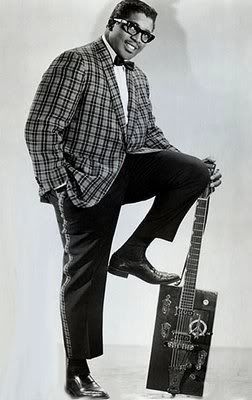
Rock pioneer Bo Diddley dies at age 79

JACKSONVILLE, Fla. - Bo Diddley, a founding father of rock 'n' roll whose distinctive "shave and a haircut, two bits" rhythm and innovative guitar effects inspired legions of other musicians, died Monday after months of ill health. He was 79.

Diddley died of heart failure at his home in Archer, Fla., spokeswoman Susan Clary said. He had suffered a heart attack in August, three months after suffering a stroke while touring in Iowa. Doctors said the stroke affected his ability to speak, and he had returned to Florida to continue rehabilitation.


The legendary singer and performer, known for his homemade square guitar, dark glasses and black hat, was an inductee into the Rock and Roll Hall of Fame, had a star on Hollywood's Walk of Fame, and received a lifetime achievement award in 1999 at the Grammy Awards. In recent years he also played for the elder President Bush and President Clinton.

Diddley appreciated the honors he received, "but it didn't put no figures in my checkbook.

"If you ain't got no money, ain't nobody calls you honey," he quipped.


The name Bo Diddley came from other youngsters when he was growing up in Chicago, he said in a 1999 interview.


"I don't know where the kids got it, but the kids in grammar school gave me that name," he said, adding that he liked it so it became his stage name. Other times, he gave somewhat differing stories on where he got the name. Some experts believe a possible source for the name is a one-string instrument used in traditional blues music called a diddley bow.


His first single, "Bo Diddley," introduced record buyers in 1955 to his signature rhythm: bomp ba-bomp bomp, bomp bomp, often summarized as "shave and a haircut, two bits." The B side, "I'm a Man," with its slightly humorous take on macho pride, also became a rock standard.


The company that issued his early songs was Chess-Checkers records, the storied Chicago-based labels that also recorded Chuck Berry and other stars.


Howard Kramer, assistant curator of the Rock and Roll Hall of Fame in Cleveland, said in 2006 that Diddley's Chess recordings "stand among the best singular recordings of the 20th century.


Diddley's other major songs included, "Say Man," "You Can't Judge a Book by Its Cover," "Shave and a Haircut," "Uncle John," "Who Do You Love?" and "The Mule.


Diddley's influence was felt on both sides of the Atlantic. Buddy Holly borrowed the bomp ba-bomp bomp, bomp bomp rhythm for his song "Not Fade Away.


The Rolling Stones' bluesy remake of that Holly song gave them their first chart single in the United States, in 1964. The following year, another British band, the Yardbirds, had a Top 20 hit in the U.S. with their version of "I'm a Man.


Diddley was also one of the pioneers of the electric guitar, adding reverb and tremelo effects. He even rigged some of his guitars himself.


"He treats it like it was a drum, very rhythmic," E. Michael Harrington, professor of music theory and composition at Belmont University in Nashville, Tenn., said in 2006.


Many other artists, including the Who, Bruce Springsteen and Elvis Costello copied aspects of Diddley's style.


Growing up, Diddley said he had no musical idols, and he wasn't entirely pleased that others drew on his innovations.


"I don't like to copy anybody. Everybody tries to do what I do, update it," he said. "I don't have any idols I copied after.


"They copied everything I did, upgraded it, messed it up. It seems to me that nobody can come up with their own thing, they have to put a little bit of Bo Diddley there," he said.


Despite his success, Diddley claimed he only received a small portion of the money he made during his career. Partly as a result, he continued to tour and record music until his stroke. Between tours, he made his home near Gainesville in north Florida.


"Seventy ain't nothing but a damn number," he told The Associated Press in 1999. "I'm writing and creating new stuff and putting together new different things. Trying to stay out there and roll with the punches. I ain't quit yet.


Diddley, like other artists of his generations, was paid a flat fee for his recordings and said he received no royalty payments on record sales. He also said he was never paid for many of his performances.


"I am owed. I've never got paid," he said. "A dude with a pencil is worse than a cat with a machine gun.


In the early 1950s, Diddley said, disc jockeys called his type of music, "Jungle Music." It was Cleveland disc jockey Alan Freed who is credited with inventing the term "rock 'n' roll.


Diddley said Freed was talking about him, when he introduced him, saying, "Here is a man with an original sound, who is going to rock and roll you right out of your seat.


Diddley won attention from a new generation in 1989 when he took part in the "Bo Knows" ad campaign for Nike, built around football and baseball star Bo Jackson. Commenting on Jackson's guitar skills, Diddley turned to the camera and said, "He don't know Diddley.


"I never could figure out what it had to do with shoes, but it worked," Diddley said. "I got into a lot of new front rooms on the tube.


Born as Ellas Bates on Dec. 30, 1928, in McComb, Miss., Diddley was later adopted by his mother's cousin and took on the name Ellas McDaniel, which his wife always called him.


When he was 5, his family moved to Chicago, where he learned the violin at the Ebenezer Baptist Church. He learned guitar at 10 and entertained passers-by on street corners.


By his early teens, Diddley was playing Chicago's Maxwell Street.


"I came out of school and made something out of myself. I am known all over the globe, all over the world. There are guys who have done a lot of things that don't have the same impact that I had," he said.


© 2008 The Associated Press

may our days be filled with bodiddley-esque guitar licks

Friday, May 30, 2008

History Lesson

Paleoanthropologist Zeresenay Alemseged looks for the roots of humanity in Ethiopia's badlands. Here he talks about finding the oldest skeleton of a humanoid child -- and how Africa holds the clues to our humanity.

Monday, May 26, 2008

Wednesday, May 21, 2008

Tuesday, May 13, 2008

Blues Man


Bluesman is a graphic novel that plunges traveling musicians Lem and Ironwood into Deep South juke joints of the 1920s. When Ironwood tries to stop a white man from attacking his black mistress, all three end up dead. Lem, the sole survivor, finds a racist posse chasing him throughout the South.
Click here for more
Check out the Bluesman blog here

FIle Under Must Watch

I caught David Mamets "Red Belt" over the weekend. During the summer when we are pelted with every summer blockbuster (aka sequels) and their commercial tie-ins It's important to remember the best summer movies are small one's
This is one of the best

Monday, May 12, 2008

7 Ways to be More Lucky


Do you think being lucky is just luck? Sounds like strange question, but luck is actually the combination of a lot of things you do in life and what you believe about yourself and others.

Dr Richard Wiseman has studied Luck for over 10 years and has shown that lucky people have certain traits and characteristics that make them more prone to being lucky click here for more

Friday, May 09, 2008

Pangea Day


Pangea Day is a global event bringing the world together through film.

Why? In a world where people are often divided by borders, difference, and conflict, it's easy to lose sight of what we all have in common. Pangea Day seeks to overcome that – to help people see themselves in others – through the power of film.

The Pangea Day Event

Starting at 18:00 GMT on May 10, 2008, locations in Cairo, Kigali, London, Los Angeles, Mumbai, and Rio de Janeiro will be linked for a live program of powerful films, live music, and visionary speakers. The entire program will be broadcast – in seven languages – to millions of people worldwide through the internet, television, and mobile phones.

The 24 short films to be featured have been selected from an international competition that generated more than 2,500 submissions from over one hundred countries. The films were chosen based on their ability to inspire, transform, and allow us see the world through another person's eyes.

Click here to see the list of films

Click here to see how and where you can see the films

Tuesday, May 06, 2008

Black billionaires

From Wikipedia, the free encyclopedia

According to the 2008 Forbes International Billionaire List, Aliko Dangote, with a net worth of $3.3 billion is the richest black person in the world, over taking Oprah Winfrey who was listed as the only black billionaire for three straight years. South African gold magnate, Patrice Motsepe , was also listed with a net worth of $2.4 billion. Aliko Dangote and Motseps are the first black Africans to ever appear on the Forbes internationl rich list,[1] however, Mobutu, the Congolese president, and Sani Abacha, the Nigerian military leader, were probably billionaires when they were alive but Forbes could never confirm this (according to Forbes magazine's Kerry Dolan).[2]

From 2001-2003, Forbes listed Black Entertainment Television founder Bob Johnson as a billionaire[3], but dropped him after his fortune was split in his divorce from his wife Sheila. [4] He returned to Forbes international rich list in 2007 with a net worth of $1.1 billion USD. In 2008 Johnson's wealth dropped further to approximately $1.0 billion USD even.[5]

Afro-multiracial billionaires have also been identified. Forbes international richest list includes Michael Lee-Chin of Canada, who is of Chinese and Afro-Caribbean ancestry. Saudi-Arabian billionaire Mohammed Al Amoudi has black ancestry because his mother is from Ethiopia, but rich lists classify him as Arab.[6]. Also included is Mo Ibrahim, a British billionaire of Sudanese Nubian ancestry[7]. While Nubians are often considered black, the U.S. census classifies people of Nubian ancestry as White[8].

Monday, May 05, 2008

Why Not Be Great by Seth Godin


The thing is, we still live in a world that's filled with opportunity. In fact, we have more than an opportunity -- we have an obligation. An obligation to spend our time doing great things. To find ideas that matter and to share them. To push ourselves and the people around us to demonstrate gratitude, insight, and inspiration. To take risks and to make the world better by being amazing.

Are these crazy times? You bet they are. But so were the days when we were doing duck-and-cover air-raid drills in school, or going through the scares of Three Mile Island and Love Canal. There will always be crazy times.

So stop thinking about how crazy the times are, and start thinking about what the crazy times demand. There has never been a worse time for business as usual. Business as usual is sure to fail, sure to disappoint, sure to numb our dreams. That's why there has never been a better time for the new. Your competitors are too afraid to spend money on new productivity tools. Your bankers have no idea where they can safely invest. Your potential employees are desperately looking for something exciting, something they feel passionate about, something they can genuinely engage in and engage with.


Click here for full blog

Friday, May 02, 2008

The BET

This is the banned Boondocks episode where BET is buffoon ed. The language aside this is one subject matter where Mcgruder and I agree

Thursday, May 01, 2008

The Fellowship part II


Equiano’s exaltation when he was finally able to purchase his freedom for £40 on July 11, 1766 quickly gave way to the terror of shipwreck. However his determination to survive was, to put it mildly, phenomenal, and he finally, and with considerable relief, left “the American quarter of the globe” and returned to “old England”. There he became a hairdresser, and learned to play the French horn, but the pay did not compare with a sailor’s, so he was soon back on board ship, sailing to the Mediterranean, Turkey and Greenland, on an expedition on which the young Horatio Nelson was almost killed by a polar bear and they barely escaped death when their ship was trapped in ice.


To read the entire article click here

Wednesday, April 30, 2008

The Fellowship


Part One
Horror and Love

Charles Middleton, James Ramsay, Granville Sharp,
and Margaret, Lady Middleton

Introduction

We are inundated by reports from all over the world, and find it hard to remember the last atrocity while facing the latest. In the world of the 18th century, word on slavery was slow to arrive, slower to be heard. The evil of slavery was growing, but only whispers reached the shires, which were preoccupied with their own problems.

Those who learned about slavery and recognized it as an evil were few in number. These few formed a fellowship to abolish the slave trade.

They were brought together in ways that seem mysterious and inexplicable. Each person brought to the fellowship something only he or she could bring, and without which the whole exhausting, dangerous effort that came close to killing several of them might have failed.

click here for more

Tuesday, April 29, 2008

Clinton is No Brother of Mine


By SONYA ROSS, Associated Press Writer

WASHINGTON - Imagine, for just a minute, the pain of America's first black president.

Not Barack Obama — Bill Clinton.

That's about the only explanation for Clinton's lack of brotherly behavior lately: He's in pain.

He is a figurative black man watching an actual black man soak in all the love that black voters used to save for him.

Suddenly, he looks oh so white.

The former president's love affair with black America hasn't soured to the point that he'll be chased out of his office in Harlem. But black people might revoke Clinton's honorary brother card if, out of his pain, he keeps hating on Obama. He's treating the Illinois senator like an unworthy heir to his racial legacy.
click here for entire article


Below Dick Gregory apologizes to Bill on the behalf of Black folks


Monday, April 28, 2008

SUCCESS AND YOUR IMAGINATION


By Michael Obi

Do you realize that in order to succeed in any of life’s endeavor, you need to use your imagination? You have to start imagining things. If you really wish to succeed begin here and now to imagine that. Imagination can be described as “the workshop or the laboratory of all man’s plans”. Desire is the very first principle of success discussed in an earlier article. Yet for that success to actualize and materialize, you need to use your imagination. This is in consonance with the popular saying that “whatever the mind of man conceives and believes, it can achieve”. This quotation has been referred to in other articles I wrote.

So, if you badly want to succeed, begin to imagine and begin to believe that which you have imagined. I have often maintained that the expression “seeing is believing” should be changed to read “believing is seeing”. I want you to begin to think of the various technological inventions that have taken place in this age of ours; and that includes space travel. There was a time when space travel was featured only on cartoons or in fiction movies. Today, all this has become reality because man has imagined things and successfully materialized these things. He has been able to use his imagination to maximum effect.

It is creative imagination that is being referred to here. Those who rely on creative imagination are the ones who are most likely to make the big discoveries and bring about innovation. They generally make things happen in this world, as it is often said. To make maximum use of your imagination, you need to be aware of your intuitive feelings. These feelings are sometimes referred to as the sixth sense by experts in psychology and spiritualism, a topic I wrote about in my book and hope to develop further in another article.

To develop your imaginative and creative powers, you need to practice frequently, and there are simple methods devised to achieve this in my book. Did you know that the secret of great leaders of industry, business, finance, music and other fields of human endeavor, is the ability to use their imagination effectively? Only those who can imagine can create and when you create you have no competition because you produce something new and spectacular. This is why the copyright law of every country in the world protects your invention and your interest. For instance, my philosophy and book which I labeled “Success Through Mind Power” are the products of my imagination. Think today, what wonderful new thing your imagination can bring to you.

Many people in life are prisoners of their own imagination. They are so full of fear to use their imagination that they would not consider new or big ideas. They get caught in their own rut and refuse to make the necessary changes to take them to the next level in life. Thus, they do not achieve the success they only dream about. So if you want to make outstanding progress in life, you must break out of your rut and begin to use your imagination creatively.

It is good to heed this warning; any thought that is registered strongly in your mind is acted upon, though it might not be immediate. The seed is sown through your imagination. Remember your mind is like a garden where you can plant weeds or sweet roses. Your garden does not discriminate. The mental weeds are the major fears of poverty, failure and ill health or death. These weeds are so dangerous that they can strangle excellent ideas by blocking your imagination.

Finally, remember that your mind has been described by one psychologist as a camera picturing whatever thought or ambition fed to it by you. Mix your thought of success with strong positive feelings and the means to achieve your goal will manifest physically. Knowing how best to do this is the basis of my philosophy and book Success through Mind Power, which is very popular at the prestigious National war College in Abuja, Nigeria, where the author has been a guest lecturer of long standing. A copy of the book is available at the website http://www.mindpowersuccess.com

Friday, April 25, 2008

Vote for Obama B4 the next IPOD is Released

Keep It Rockin


Keep it Rolling


Keep it Dance Hall


Keep it sexy

Keep it Real


Keep it Fair


Keep the Promise

Wednesday, April 23, 2008

Tuesday, April 22, 2008

Top 5 Tips for Getting Motivated


1. Begin with the end in mind

thoughtfulThat's right, identify what it is you want to achieve. As Stephen Covey stated in the famous quote above, to know your outcome gives any work you may need to do much greater focus.

So, get focused, and get writing with what it is you want to achieve. Don't worry if you can’t yet dream the big stuff yet, start small – and I promise you'll be moving on up to the bigger pictures sooner than you ever imagined!
2. Get a plan

diaryIf you knew where you wanted to go, the next question would be, "how are you going to get there?" What would you need to do first in order to be "on course" to succeed? Be practical; fit your planning in with whatever time you have right now, but push just a little bit.
3. Chunk

Chunking is that age old way of achieving what may first appear impossible, simply because it's just too damn big. Chunk down, plan "baby steps," and again before you know it you'll be looking like a giant.
4. Challenge those fears

Whatever comes up and stops you achieving, challenge. Ask yourself;

* Is this for me?
* Is it what I really want?
* What do I need to change in order to get success?
* Do I need to enlist anyone else’s help or take some training?
* What would I need to believe to win?
* What can I do to re-enforce that new belief?

5. The secret ingredient...

...and the secret? There is no secret; just TAKE ACTION. There's only so much dreaming, planning, refining, challenging, chunking, reviewing (blah blah blah) a person can do – and then you need to take action.

Nothing - let me repeat - NOTHING will build up your motivation quicker or more solidly than following through on your actions. Remember your mantra, from today it's "do it, do it now!"

Let me know how you get on.

Much respect,
Mike xx

Monday, April 21, 2008

After the Wire

Tristan Wilds, who portrayed "Michael" from The Wire in and out of character
value="http://www.youtube.com/v/E6TeCVM4JWc&hl=en">

Friday, April 18, 2008

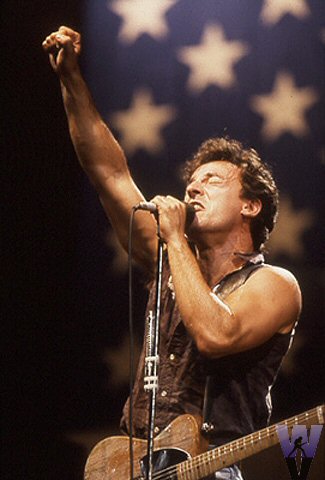
The BOSS backs Barack


If a single figure in American pop culture represents the ideals of the working class
its Bruce Springsteen. On his website he endorsed Obama


Dear Friends and Fans:
LIke most of you, I've been following the campaign and I have now seen and heard enough to know where I stand. Senator Obama, in my view, is head and shoulders above the rest.
He has the depth, the reflectiveness, and the resilience to be our next President. He speaks to the America I've envisioned in my music for the past 35 years, a generous nation with a citizenry willing to tackle nuanced and complex problems, a country that's interested in its collective destiny and in the potential of its gathered spirit. A place where "...nobody crowds you, and nobody goes it alone."
At the moment, critics have tried to diminish Senator Obama through the exaggeration of certain of his comments and relationships. While these matters are worthy of some discussion, they have been ripped out of the context and fabric of the man's life and vision, so well described in his excellent book, Dreams of My Father, often in order to distract us from discussing the real issues: war and peace, the fight for economic and racial justice, reaffirming our Constitution, and the protection and enhancement of our environment.
After the terrible damage done over the past eight years, a great American reclamation project needs to be undertaken. I believe that Senator Obama is the best candidate to lead that project and to lead us into the 21st Century with a renewed sense of moral purpose and of ourselves as Americans.
Over here on E Street, we're proud to support Obama for President.


Wednesday, April 16, 2008

Keith Knight launches “Knight Life”

By Alan Gardner

United Media is launching a few feature by Keith Knight entitled The Knight Life on May 5th. The political and satirical feature is described as tackling “contemporary issues like consumer culture, bacon, the media, race, family and everything else, gently mocking the minutiae of daily life with self-deprecating humor, honesty and goofiness.”

“Keith Knight became one of the most successful alternative weekly cartoonists in America by drawing honest stories in an honest style everyone can enjoy,” says Ted Rall, Acquisitions Editor for United Media. “The Knight Life moves his amusing take on the autobio genre to the next logical level-a daily strip that hearkens back to the days when the comics were funny, but updated for 21st century weirdness. Lively, smart, relevant, personal and witty, The Knight Life is an essential addition to any comics page in need of more laughs.”

Keith has twice been awarded a Glyph Award (2006, 2007) and the 2007 Harvey Award for Best Comic Strip (for “The K Chronicles”). He creates “(Th)ink,” a weekly comic panel, and is a frequent contributor to Mad Magazine and ESPN The Magazine.

Monday, April 14, 2008

8 Ways to take action now


Wipe the slate clean – If you have too many projects on the go, clear them all and start from scratch. When you have wiped the slate clean, concentrate on thing at a time until it’s finished and then move onto the next. If you can’t clear everything, just drop them temporarily, concentrate on one thing until it’s finished and then move on. You will find you move a lot quicker through everything you need to get done.

List everything – Make a list of everything you would like to do, whether it be cleaning the house to taking the dog a walk. Write it down.

Prioritise – Pick the most important thing you have to do for the day, or week or year, and then pick the next most important thing and so on until you have reached the bottom off your list.

Eliminate distraction – No I don’t mean kill your partner! Eliminate the things you do from day to day that distracts you from taking action for example TV, books, computer. When you eliminate distractions, your mind wants something to do and this makes you more inclined to take action on the things you want or need to do.

Take a day off – Maybe a bit contradictory this one. It’s a simple piece of advice but one that is hard to do. Just take a whole day off, the world will still turn, the work will get done and nobody will die because you are not there. You will come back refreshed and ready to take action again which means you will be a lot more productive than you would have been should you have kept going.

Clear the clutter – Clearing the clutter, whether it be from your desk, your house, or your wardrobe. When there is clutter in your life there is clutter in your mind, clearing the clutters clears your mind.

Analysis paralysis – This is the term given to people who are analysing things too much and it keeps them from moving on. Stop analysing and just do it. There comes a time when you have to stop evaluating something and just bite the bullet and do it, if it doesn’t work out do something else and start again.

Change the narrator of your thoughts – Do your thoughts predominantly sound like Elmer Fud on dope; ‘Yeah, I have to get up but I can’t be arsed, I’ll do it tomorrow’. Change Elmer Fud to someone who gets you going, someone who can motivate you into doing something. It can be anybody from your best mate to your wife or a film star, anybody as long as they can motivate you. This can be quite amusing and the results can be great.

Tuesday, April 08, 2008

Found It!

Have You ever watched a music video that sticks in your brain, and even the years can't erase it? That was the case of this Tony Rich video. I saw it on MTV maybe twice and the visuals just stuck in my head

Monday, April 07, 2008

"Thinking of Martin Luther King, Jr. and his words of wisdom" by the Lumonics Light Museum

I couldn't articulate my feeling about King, more beautifully than the Lumonics Light Museum, so I didn't.


Jan. 15, 1929 - April 4, 1968

This blog was created by
b-ray of the Lumonics Light Museum (lumo) the most positive site on the internet. do yourself a favor check them out click here.

Friday, April 04, 2008

Night Biter Cover Contest


Urban Horror. com is seeking a cover model for the reissue of the young adult novel Night Biters a Tale Urban Horror

The winner will receive $100 and will be featured
on the cover of the novel Night Biters a Tale Urban Horror
for one year
What we‘re looking for
• Fresh face Models from diverse ethnicities
• A variety of hairstyles, long, short, red hair wavy, etc
• Urban looks, taggers, dreadlocks, skaters or other urban looks
• No or very light makeup

What we‘re not looking for

• Group shots
• Photos that are too revealing or suggestive
• Heavy makeup
• Props (vampire teeth, capes, blood, etc
For Contest Rules & Regulations click here

Contest ends May 1st

Wednesday, April 02, 2008

Change in Zimbabwe


HARARE, Zimbabwe - The main opposition party claimed outright victory Wednesday for its leader Morgan Tsvangirai, saying he had won 50.3 percent of the vote compared to 43.8 percent for President Robert Mugabe.

The ruling ZANU-PF party rejected the opposition's claims, saying that it would await the full results from the Zimbabwe Electoral Commission, which has not yet published the outcome of Saturday's presidential poll.

The state Herald newspaper, meanwhile, predicted a runoff in the first official admission that Zimbabwe's autocratic leader of 28 years has failed to win re-election. A presidential candidate needs at least 50 percent plus one vote to avoid a runoff.

However, Movement for Democratic Change general secretary Tendai Biti said there was no need.

"We maintain that we have won the presidential election outright without the need for a run-off," Biti told a news conference.

click here for full article

Monday, March 31, 2008

LIFE'S COMING ATTRACTIONS


By Katie Byrd


Albert Einstein believed “Your imagination is the preview to life’s coming attractions.” What do you think? By effectively using your imagination you can create solutions to any problem, take a successful idea and mold and modify it to work in an even better way or you can start from scratch and invent something new and outrageous - the sky’s the limit!

But, if this is all possible, then why aren’t we busy doing it? Why aren’t we using our imagination creatively? Well, the truth is we’re always using our imagination for one thing or another. The problem being that most people seldom focus their imagination in the direction of their real desires.

If you’re thinking about (imagining) what you want half the time and half the time you’re thinking about what you don’t want, what do you think you will end up with? Probably a big zero, don’t you “imagine”? Wouldn’t the two opposing imaginings just cancel each other out?

Now what if you were to spend 55% of your time joyfully imaging what you want. That would only leave 45% for worry, anger, fear, etc. Don’t you “imagine” that you would improve your results? And as you practice and learn to “accentuate the positive and eliminate the negative,” don’t you “imagine” you could vastly improve your odds – maybe even up to 70, 80, 90 or 100%? That way you could start creating your life exactly the way you want it.

I think you can do it. And so does Albert Einstein. Because Einstein not only discovered the Theory of Relativity, he also knew that “Your imagination is the preview of [your] life’s coming attractions.

Katie Byrd will take you by the hand and teach you the skills she's used to journey from a financially strapped, bad credit nightmare to debt free abundant living. To find out more visit: http://abundanceandwealth.bellaonline.com

Friday, March 28, 2008

Davey D Fixes Fox

Journalist Davey D (the Edward R Murrow of hip hop) not only is a shrewed reporter but a damn fine citizen. Watch him give one of Fix news ambush reporters the same treatment, and then fix news response


Davey D myspace

Wednesday, March 26, 2008

The Audacity of Hopelessness & Other Thoughts


Hillary Clinton’s presidential prospects continue to dim. The door is closing. Night is coming. The end, however, is not near. When you step back and think about it, she is amazing. She possesses the audacity of hopelessness
Click here to read David Brooks Article The Long Defeat


Listening to Senator Obama’s speech, it wasn’t Dr. King who first came to mind but Bobby Kennedy, standing on a flatbed truck in Indianapolis on a cold, windy night in April 1968. Kennedy had to tell a crowd that had gathered to hear him speak that King had been murdered.

"We can make an effort, as Martin Luther King did, to understand and to comprehend, and to replace that violence, that stain of bloodshed that has spread across our land, with an effort to understand with compassion and love.” Click here to read Bob Herbert' article With a Powerful Speech, Obama Offers a Challenge

Tuesday, March 25, 2008

Bayou

An Amazing story
South of the Mason-Dixon lurks a strange world of gods and monsters born of years of slavery, civil war, innocent blood, hate and strife. The daughter of a poor black sharecropper, Lee Wagstaff, joins a blues-singing swamp monster name Bayou on a southern odyssey through a mythic combination of depression era Mississippi, African mythology and American folklore in order to rescue her childhood friend and save her fathers life. click here to seeBayou

Monday, March 24, 2008

The Hit TV Media Ignored


(AFP) — Barack Obama's stirring speech on racial division in the United States has become an online hit viewed nearly 2.5 million times on YouTube by Friday afternoon.
A video clip of Obama's speech lasting 37 minutes and 39 seconds, an epic by Internet standards, has attracted the most viewers while video snippets of the presentation have been seen by tens of thousands of people.
"This speech made my eyes to water" one person wrote in an online discussion forum attached to the full-length Obama video.
"I almost started to cry."


The Speech


Two hundred and twenty one years ago, in a hall that still stands across the street, a group of men gathered and, with these simple words, launched America's improbable experiment in democracy. Farmers and scholars; statesmen and patriots who had traveled across an ocean to escape tyranny and persecution finally made real their declaration of independence at a Philadelphia convention that lasted through the spring of 1787.The document they produced was eventually signed but ultimately unfinished. It was stained by this nation's original sin of slavery, a question that divided the colonies and brought the convention to a stalemate until the founders chose to allow the slave trade to continue for at least twenty more years, and to leave any final resolution to future generations.Of course, the answer to the slavery question was already embedded within our Constitution – a Constitution that had at is very core the ideal of equal citizenship under the law; a Constitution that promised its people liberty, and justice, and a union that could be and should be perfected over time.And yet words on a parchment would not be enough to deliver slaves from bondage, or provide men and women of every color and creed their full rights and obligations as citizens of the United States. What would be needed were Americans in successive generations who were willing to do their part – through protests and struggle, on the streets and in the courts, through a civil war and civil disobedience and always at great risk - to narrow that gap between the promise of our ideals and the reality of their time.This was one of the tasks we set forth at the beginning of this campaign – to continue the long march of those who came before us, a march for a more just, more equal, more free, more caring and more prosperous America. I chose to run for the presidency at this moment in history because I believe deeply that we cannot solve the challenges of our time unless we solve them together – unless we perfect our union by understanding that we may have different stories, but we hold common hopes; that we may not look the same and we may not have come from the same place, but we all want to move in the same direction – towards a better future for of children and our grandchildren.This belief comes from my unyielding faith in the decency and generosity of the American people. But it also comes from my own American story.I am the son of a black man from Kenya and a white woman from Kansas. I was raised with the help of a white grandfather who survived a Depression to serve in Patton's Army during World War II and a white grandmother who worked on a bomber assembly line at Fort Leavenworth while he was overseas. I've gone to some of the best schools in America and lived in one of the world's poorest nations. I am married to a black American who carries within her the blood of slaves and slaveowners – an inheritance we pass on to our two precious daughters. I have brothers, sisters, nieces, nephews, uncles and cousins, of every race and every hue, scattered across three continents, and for as long as I live, I will never forget that in no other country on Earth is my story even possible.It's a story that hasn't made me the most conventional candidate. But it is a story that has seared into my genetic makeup the idea that this nation is more than the sum of its parts – that out of many, we are truly one.Throughout the first year of this campaign, against all predictions to the contrary, we saw how hungry the American people were for this message of unity. Despite the temptation to view my candidacy through a purely racial lens, we won commanding victories in states with some of the whitest populations in the country. In South Carolina, where the Confederate Flag still flies, we built a powerful coalition of African Americans and white Americans.This is not to say that race has not been an issue in the campaign. At various stages in the campaign, some commentators have deemed me either "too black" or "not black enough." We saw racial tensions bubble to the surface during the week before the South Carolina primary. The press has scoured every exit poll for the latest evidence of racial polarization, not just in terms of white and black, but black and brown as well.And yet, it has only been in the last couple of weeks that the discussion of race in this campaign has taken a particularly divisive turn.On one end of the spectrum, we've heard the implication that my candidacy is somehow an exercise in affirmative action; that it's based solely on the desire of wide-eyed liberals to purchase racial reconciliation on the cheap. On the other end, we've heard my former pastor, Reverend Jeremiah Wright, use incendiary language to express views that have the potential not only to widen the racial divide, but views that denigrate both the greatness and the goodness of our nation; that rightly offend white and black alike.I have already condemned, in unequivocal terms, the statements of Reverend Wright that have caused such controversy. For some, nagging questions remain. Did I know him to be an occasionally fierce critic of American domestic and foreign policy? Of course. Did I ever hear him make remarks that could be considered controversial while I sat in church? Yes. Did I strongly disagree with many of his political views? Absolutely – just as I'm sure many of you have heard remarks from your pastors, priests, or rabbis with which you strongly disagreed.But the remarks that have caused this recent firestorm weren't simply controversial. They weren't simply a religious leader's effort to speak out against perceived injustice. Instead, they expressed a profoundly distorted view of this country – a view that sees white racism as endemic, and that elevates what is wrong with America above all that we know is right with America; a view that sees the conflicts in the Middle East as rooted primarily in the actions of stalwart allies like Israel, instead of emanating from the perverse and hateful ideologies of radical Islam.As such, Reverend Wright's comments were not only wrong but divisive, divisive at a time when we need unity; racially charged at a time when we need to come together to solve a set of monumental problems – two wars, a terrorist threat, a falling economy, a chronic health care crisis and potentially devastating climate change; problems that are neither black or white or Latino or Asian, but rather problems that confront us all.Given my background, my politics, and my professed values and ideals, there will no doubt be those for whom my statements of condemnation are not enough. Why associate myself with Reverend Wright in the first place, they may ask? Why not join another church? And I confess that if all that I knew of Reverend Wright were the snippets of those sermons that have run in an endless loop on the television and You Tube, or if Trinity United Church of Christ conformed to the caricatures being peddled by some commentators, there is no doubt that I would react in much the same wayBut the truth is, that isn't all that I know of the man. The man I met more than twenty years ago is a man who helped introduce me to my Christian faith, a man who spoke to me about our obligations to love one another; to care for the sick and lift up the poor. He is a man who served his country as a U.S. Marine; who has studied and lectured at some of the finest universities and seminaries in the country, and who for over thirty years led a church that serves the community by doing God's work here on Earth – by housing the homeless, ministering to the needy, providing day care services and scholarships and prison ministries, and reaching out to those suffering from HIV/AIDS.In my first book, Dreams From My Father, I described the experience of my first service at Trinity:"People began to shout, to rise from their seats and clap and cry out, a forceful wind carrying the reverend's voice up into the rafters….And in that single note – hope! – I heard something else; at the foot of that cross, inside the thousands of churches across the city, I imagined the stories of ordinary black people merging with the stories of David and Goliath, Moses and Pharaoh, the Christians in the lion's den, Ezekiel's field of dry bones. Those stories – of survival, and freedom, and hope – became our story, my story; the blood that had spilled was our blood, the tears our tears; until this black church, on this bright day, seemed once more a vessel carrying the story of a people into future generations and into a larger world. Our trials and triumphs became at once unique and universal, black and more than black; in chronicling our journey, the stories and songs gave us a means to reclaim memories tha t we didn't need to feel shame about…memories that all people might study and cherish – and with which we could start to rebuild."That has been my experience at Trinity. Like other predominantly black churches across the country, Trinity embodies the black community in its entirety – the doctor and the welfare mom, the model student and the former gang-banger. Like other black churches, Trinity's services are full of raucous laughter and sometimes bawdy humor. They are full of dancing, clapping, screaming and shouting that may seem jarring to the untrained ear. The church contains in full the kindness and cruelty, the fierce intelligence and the shocking ignorance, the struggles and successes, the love and yes, the bitterness and bias that make up the black experience in America.And this helps explain, perhaps, my relationship with Reverend Wright. As imperfect as he may be, he has been like family to me. He strengthened my faith, officiated my wedding, and baptized my children. Not once in my conversations with him have I heard him talk about any ethnic group in derogatory terms, or treat whites with whom he interacted with anything but courtesy and respect. He contains within him the contradictions – the good and the bad – of the community that he has served diligently for so many years.I can no more disown him than I can disown the black community. I can no more disown him than I can my white grandmother – a woman who helped raise me, a woman who sacrificed again and again for me, a woman who loves me as much as she loves anything in this world, but a woman who once confessed her fear of black men who passed by her on the street, and who on more than one occasion has uttered racial or ethnic stereotypes that made me cringe.These people are a part of me. And they are a part of America, this country that I love.Some will see this as an attempt to justify or excuse comments that are simply inexcusable. I can assure you it is not. I suppose the politically safe thing would be to move on from this episode and just hope that it fades into the woodwork. We can dismiss Reverend Wright as a crank or a demagogue, just as some have dismissed Geraldine Ferraro, in the aftermath of her recent statements, as harboring some deep-seated racial bias.But race is an issue that I believe this nation cannot afford to ignore right now. We would be making the same mistake that Reverend Wright made in his offending sermons about America – to simplify and stereotype and amplify the negative to the point that it distorts reality.The fact is that the comments that have been made and the issues that have surfaced over the last few weeks reflect the complexities of race in this country that we've never really worked through – a part of our union that we have yet to perfect. And if we walk away now, if we simply retreat into our respective corners, we will never be able to come together and solve challenges like health care, or education, or the need to find good jobs for every American.Understanding this reality requires a reminder of how we arrived at this point. As William Faulkner once wrote, "The past isn't dead and buried. In fact, it isn't even past." We do not need to recite here the history of racial injustice in this country. But we do need to remind ourselves that so many of the disparities that exist in the African-American community today can be directly traced to inequalities passed on from an earlier generation that suffered under the brutal legacy of slavery and Jim Crow.Segregated schools were, and are, inferior schools; we still haven't fixed them, fifty years after Brown v. Board of Education, and the inferior education they provided, then and now, helps explain the pervasive achievement gap between today's black and white students.Legalized discrimination - where blacks were prevented, often through violence, from owning property, or loans were not granted to African-American business owners, or black homeowners could not access FHA mortgages, or blacks were excluded from unions, or the police force, or fire departments – meant that black families could not amass any meaningful wealth to bequeath to future generations. That history helps explain the wealth and income gap between black and white, and the concentrated pockets of poverty that persists in so many of today's urban and rural communities.A lack of economic opportunity among black men, and the shame and frustration that came from not being able to provide for one's family, contributed to the erosion of black families – a problem that welfare policies for many years may have worsened. And the lack of basic services in so many urban black neighborhoods – parks for kids to play in, police walking the beat, regular garbage pick-up and building code enforcement – all helped create a cycle of violence, blight and neglect that continue to haunt us.This is the reality in which Reverend Wright and other African-Americans of his generation grew up. They came of age in the late fifties and early sixties, a time when segregation was still the law of the land and opportunity was systematically constricted. What's remarkable is not how many failed in the face of discrimination, but rather how many men and women overcame the odds; how many were able to make a way out of no way for those like me who would come after them.But for all those who scratched and clawed their way to get a piece of the American Dream, there were many who didn't make it – those who were ultimately defeated, in one way or another, by discrimination. That legacy of defeat was passed on to future generations – those young men and increasingly young women who we see standing on street corners or languishing in our prisons, without hope or prospects for the future. Even for those blacks who did make it, questions of race, and racism, continue to define their worldview in fundamental ways. For the men and women of Reverend Wright's generation, the memories of humiliation and doubt and fear have not gone away; nor has the anger and the bitterness of those years. That anger may not get expressed in public, in front of white co-workers or white friends. But it does find voice in the barbershop or around the kitchen table. At times, that anger is exploited by politicia ns, to gin up votes along racial lines, or to make up for a politician's own failings.And occasionally it finds voice in the church on Sunday morning, in the pulpit and in the pews. The fact that so many people are surprised to hear that anger in some of Reverend Wright's sermons simply reminds us of the old truism that the most segregated hour in American life occurs on Sunday morning. That anger is not always productive; indeed, all too often it distracts attention from solving real problems; it keeps us from squarely facing our own complicity in our condition, and prevents the African-American community from forging the alliances it needs to bring about real change. But the anger is real; it is powerful; and to simply wish it away, to condemn it without understanding its roots, only serves to widen the chasm of misunderstanding that exists between the races.In fact, a similar anger exists within segments of the white community. Most working- and middle-class white Americans don't feel that they have been particularly privileged by their race. Their experience is the immigrant experience – as far as they're concerned, no one's handed them anything, they've built it from scratch. They've worked hard all their lives, many times only to see their jobs shipped overseas or their pension dumped after a lifetime of labor. They are anxious about their futures, and feel their dreams slipping away; in an era of stagnant wages and global competition, opportunity comes to be seen as a zero sum game, in which your dreams come at my expense. So when they are told to bus their children to a school across town; when they hear that an African American is getting an advantage in landing a good job or a spot in a good college because of an injustice that they themselves never committ ed; when they're told that their fears about crime in urban neighborhoods are somehow prejudiced, resentment builds over time.Like the anger within the black community, these resentments aren't always expressed in polite company. But they have helped shape the political landscape for at least a generation. Anger over welfare and affirmative action helped forge the Reagan Coalition. Politicians routinely exploited fears of crime for their own electoral ends. Talk show hosts and conservative commentators built entire careers unmasking bogus claims of racism while dismissing legitimate discussions of racial injustice and inequality as mere political correctness or reverse racism.Just as black anger often proved counterproductive, so have these white resentments distracted attention from the real culprits of the middle class squeeze – a corporate culture rife with inside dealing, questionable accounting practices, and short-term greed; a Washington dominated by lobbyists and special interests; economic policies that favor the few over the many. And yet, to wish away the resentments of white Americans, to label them as misguided or even racist, without recognizing they are grounded in legitimate concerns – this too widens the racial divide, and blocks the path to understanding.This is where we are right now. It's a racial stalemate we've been stuck in for years. Contrary to the claims of some of my critics, black and white, I have never been so naïve as to believe that we can get beyond our racial divisions in a single election cycle, or with a single candidacy – particularly a candidacy as imperfect as my own.But I have asserted a firm conviction – a conviction rooted in my faith in God and my faith in the American people – that working together we can move beyond some of our old racial wounds, and that in fact we have no choice is we are to continue on the path of a more perfect union.For the African-American community, that path means embracing the burdens of our past without becoming victims of our past. It means continuing to insist on a full measure of justice in every aspect of American life. But it also means binding our particular grievances – for better health care, and better schools, and better jobs - to the larger aspirations of all Americans -- the white woman struggling to break the glass ceiling, the white man whose been laid off, the immigrant trying to feed his family. And it means taking full responsibility for own lives – by demanding more from our fathers, and spending more time with our children, and reading to them, and teaching them that while they may face challenges and discrimination in their own lives, they must never succumb to despair or cynicism; they must always believe that they can write their own destiny.Ironically, this quintessentially American – and yes, conservative – notion of self-help found frequent expression in Reverend Wright's sermons. But what my former pastor too often failed to understand is that embarking on a program of self-help also requires a belief that society can change.The profound mistake of Reverend Wright's sermons is not that he spoke about racism in our society. It's that he spoke as if our society was static; as if no progress has been made; as if this country – a country that has made it possible for one of his own members to run for the highest office in the land and build a coalition of white and black; Latino and Asian, rich and poor, young and old -- is still irrevocably bound to a tragic past. But what we know -- what we have seen – is that America can change. That is true genius of this nation. What we have already achieved gives us hope – the audacity to hope – for what we can and must achieve tomorrow.In the white community, the path to a more perfect union means acknowledging that what ails the African-American community does not just exist in the minds of black people; that the legacy of discrimination - and current incidents of discrimination, while less overt than in the past - are real and must be addressed. Not just with words, but with deeds – by investing in our schools and our communities; by enforcing our civil rights laws and ensuring fairness in our criminal justice system; by providing this generation with ladders of opportunity that were unavailable for previous generations. It requires all Americans to realize that your dreams do not have to come at the expense of my dreams; that investing in the health, welfare, and education of black and brown and white children will ultimately help all of America prosper.In the end, then, what is called for is nothing more, and nothing less, than what all the world's great religions demand – that we do unto others as we would have them do unto us. Let us be our brother's keeper, Scripture tells us. Let us be our sister's keeper. Let us find that common stake we all have in one another, and let our politics reflect that spirit as well.For we have a choice in this country. We can accept a politics that breeds division, and conflict, and cynicism. We can tackle race only as spectacle – as we did in the OJ trial – or in the wake of tragedy, as we did in the aftermath of Katrina - or as fodder for the nightly news. We can play Reverend Wright's sermons on every channel, every day and talk about them from now until the election, and make the only question in this campaign whether or not the American people think that I somehow believe or sympathize with his most offensive words. We can pounce on some gaffe by a Hillary supporter as evidence that she's playing the race card, or we can speculate on whether white men will all flock to John McCain in the general election regardless of his policies.We can do that.But if we do, I can tell you that in the next election, we'll be talking about some other distraction. And then another one. And then another one. And nothing will change.That is one option. Or, at this moment, in this election, we can come together and say, "Not this time." This time we want to talk about the crumbling schools that are stealing the future of black children and white children and Asian children and Hispanic children and Native American children. This time we want to reject the cynicism that tells us that these kids can't learn; that those kids who don't look like us are somebody else's problem. The children of America are not those kids, they are our kids, and we will not let them fall behind in a 21st century economy. Not this time.This time we want to talk about how the lines in the Emergency Room are filled with whites and blacks and Hispanics who do not have health care; who don't have the power on their own to overcome the special interests in Washington, but who can take them on if we do it together.This time we want to talk about the shuttered mills that once provided a decent life for men and women of every race, and the homes for sale that once belonged to Americans from every religion, every region, every walk of life. This time we want to talk about the fact that the real problem is not that someone who doesn't look like you might take your job; it's that the corporation you work for will ship it overseas for nothing more than a profit.This time we want to talk about the men and women of every color and creed who serve together, and fight together, and bleed together under the same proud flag. We want to talk about how to bring them home from a war that never should've been authorized and never should've been waged, and we want to talk about how we'll show our patriotism by caring for them, and their families, and giving them the benefits they have earned.I would not be running for President if I didn't believe with all my heart that this is what the vast majority of Americans want for this country. This union may never be perfect, but generation after generation has shown that it can always be perfected. And today, whenever I find myself feeling doubtful or cynical about this possibility, what gives me the most hope is the next generation – the young people whose attitudes and beliefs and openness to change have already made history in this election.There is one story in particularly that I'd like to leave you with today – a story I told when I had the great honor of speaking on Dr. King's birthday at his home church, Ebenezer Baptist, in Atlanta.There is a young, twenty-three year old white woman named Ashley Baia who organized for our campaign in Florence, South Carolina. She had been working to organize a mostly African-American community since the beginning of this campaign, and one day she was at a roundtable discussion where everyone went around telling their story and why they were there.And Ashley said that when she was nine years old, her mother got cancer. And because she had to miss days of work, she was let go and lost her health care. They had to file for bankruptcy, and that's when Ashley decided that she had to do something to help her mom.She knew that food was one of their most expensive costs, and so Ashley convinced her mother that what she really liked and really wanted to eat more than anything else was mustard and relish sandwiches. Because that was the cheapest way to eat.She did this for a year until her mom got better, and she told everyone at the roundtable that the reason she joined our campaign was so that she could help the millions of other children in the country who want and need to help their parents too.Now Ashley might have made a different choice. Perhaps somebody told her along the way that the source of her mother's problems were blacks who were on welfare and too lazy to work, or Hispanics who were coming into the country illegally. But she didn't. She sought out allies in her fight against injustice.Anyway, Ashley finishes her story and then goes around the room and asks everyone else why they're supporting the campaign. They all have different stories and reasons. Many bring up a specific issue. And finally they come to this elderly black man who's been sitting there quietly the entire time. And Ashley asks him why he's there. And he does not bring up a specific issue. He does not say health care or the economy. He does not say education or the war. He does not say that he was there because of Barack Obama. He simply says to everyone in the room, "I am here because of Ashley.""I'm here because of Ashley." By itself, that single moment of recognition between that young white girl and that old black man is not enough. It is not enough to give health care to the sick, or jobs to the jobless, or education to our children.But it is where we start. It is where our union grows stronger. And as so many generations have come to realize over the course of the two-hundred and twenty one years since a band of patriots signed that document in Philadelphia, that is where the perfection begins.

Sunday, March 23, 2008

Branding


The Brand Gap


From: coolstuff, 1 year ago


How to bridge the distance between business strategy and design


SlideShare Link

Wednesday, March 19, 2008

The Big Picture. A More Perfect Union

For people who are looking for a more hopeful, unifying course in race relations — and for a broader healing in our society — Senator Obama’s speech will be long-remembered and oft-acclaimed. It was powerful, brilliant and effective. No matter what happens in the 2008 presidential campaign, it is an address that Americans will read and recall for generations to come.
Ron Klain NYT

Tuesday, March 18, 2008

Missing the Big Picture

This 30 second commercial clearly illustrates how you will see whatever you focus your attention on


What is it you must see?